
Wind Damage Roof Repair in San Antonio
High wind can lift, crease or tear off shingles and leave your roof open to the next rain. We check it up close, photograph what we find and tell you straight what it needs.
Prefer to text? Text (210) 418-7663
Free wind damage inspection
Emergency tarping
Repair or replace, honestly
How Wind Damages a Roof
Wind doesn’t push straight down on a roof. Gusts catch the edges, corners and ridge and try to pull shingles and metal up. Some of that damage is easy to spot. Some of it, like a shingle that’s come unsealed, can’t be seen from the ground and shows up as a leak later.
Lifted and creased shingles
Broken seal strips
Missing shingles
Exposed nails
Ridge caps blown off
Flashing pulled loose
Limbs and debris
Metal panels lifting
Signs to Look For From the Ground
- Shingles or shingle pieces in the yard, on the driveway or in the gutters.
- Bare or off-color patches on the roof where shingles used to be.
- Shingle edges that look raised or wavy instead of lying flat.
- Ridge caps missing or out of line.
- Flashing, drip edge or metal trim bent, loose or hanging.
- Limbs on the roof or branches down near the house.
- New water stains on a ceiling or in the attic.
Please stay off your roof. Look from the ground, or zoom in with your phone. Loose shingles and a wet roof are dangerous, so let us do the climbing. If you’re not sure what you’re seeing, start with a free roof inspection.
Wind Damage From Our Jobs
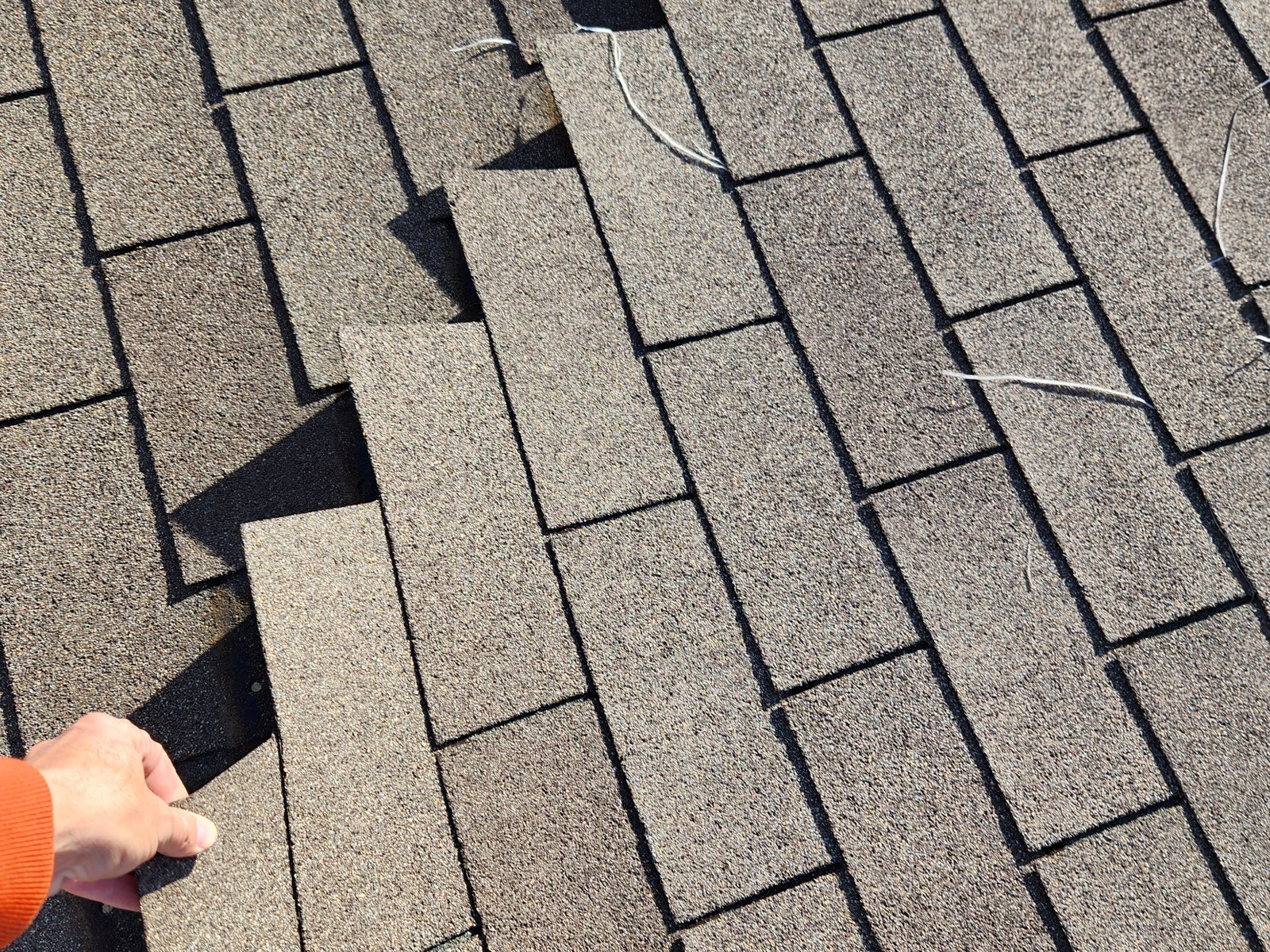
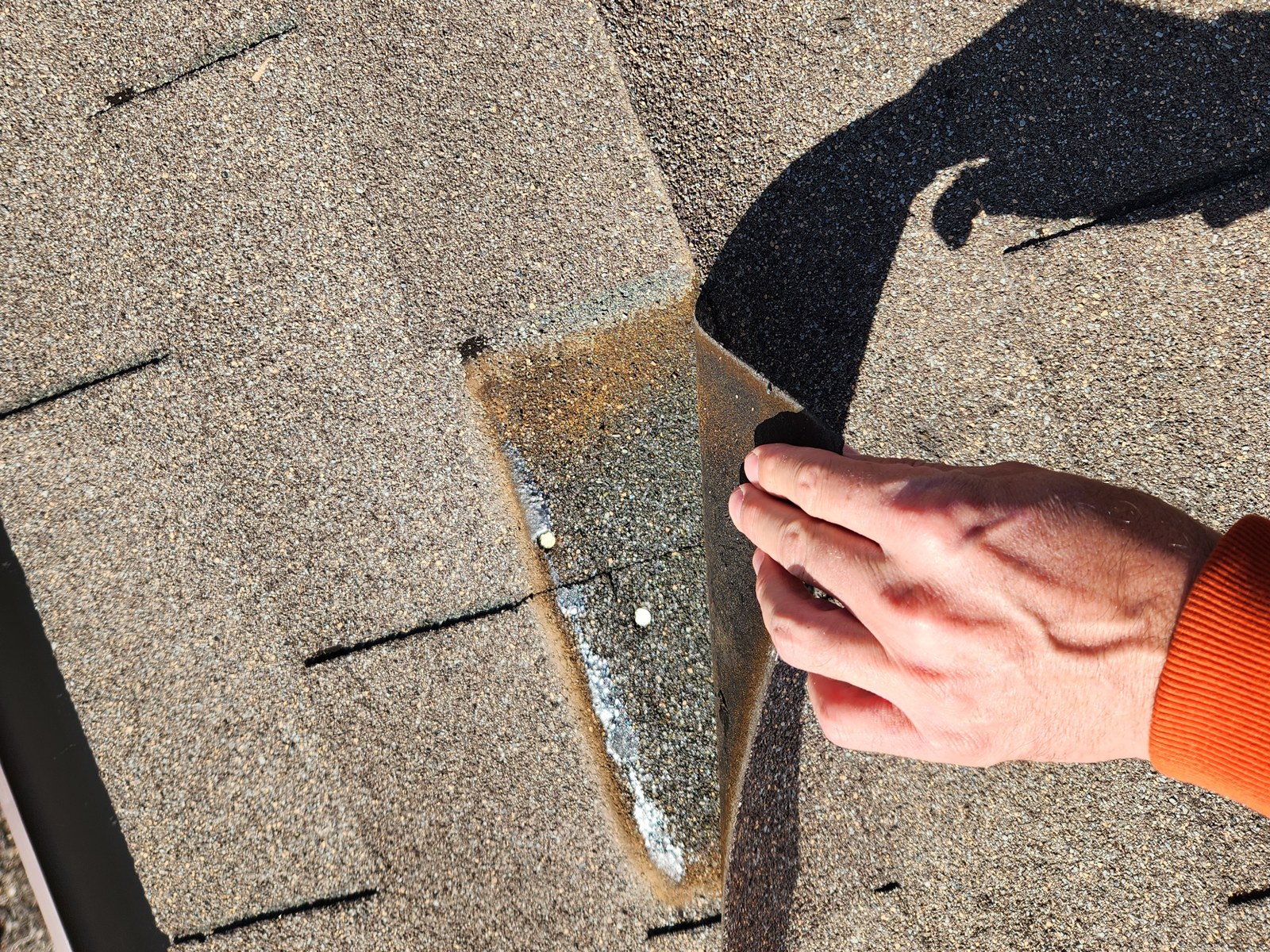
Wind-damaged shingles, New Braunfels, TX
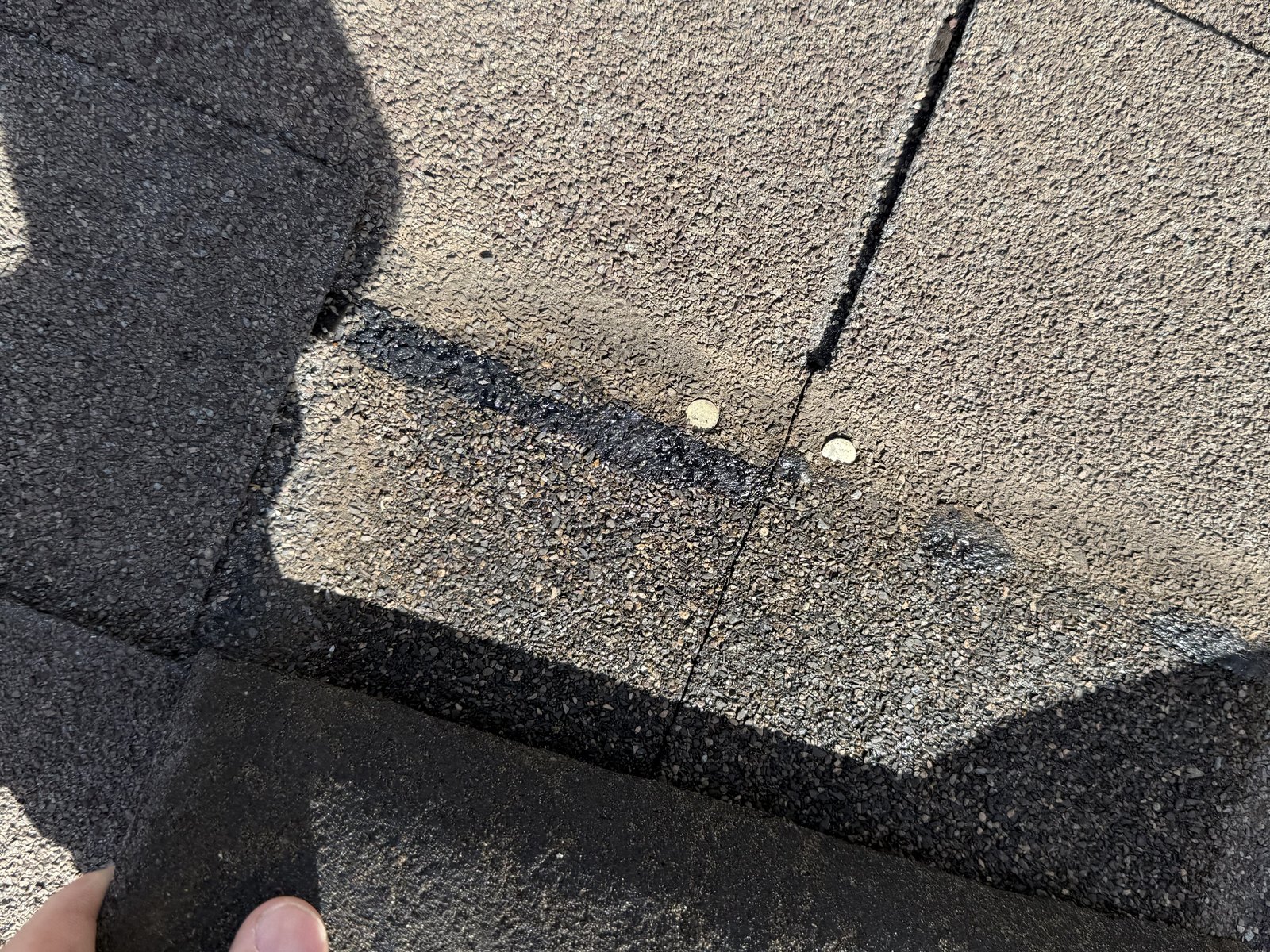
Wind tore and lifted shingles across this roof. Several were creased, and others had come unsealed and lifted with a light pull, leaving the nails and sealant strip showing.
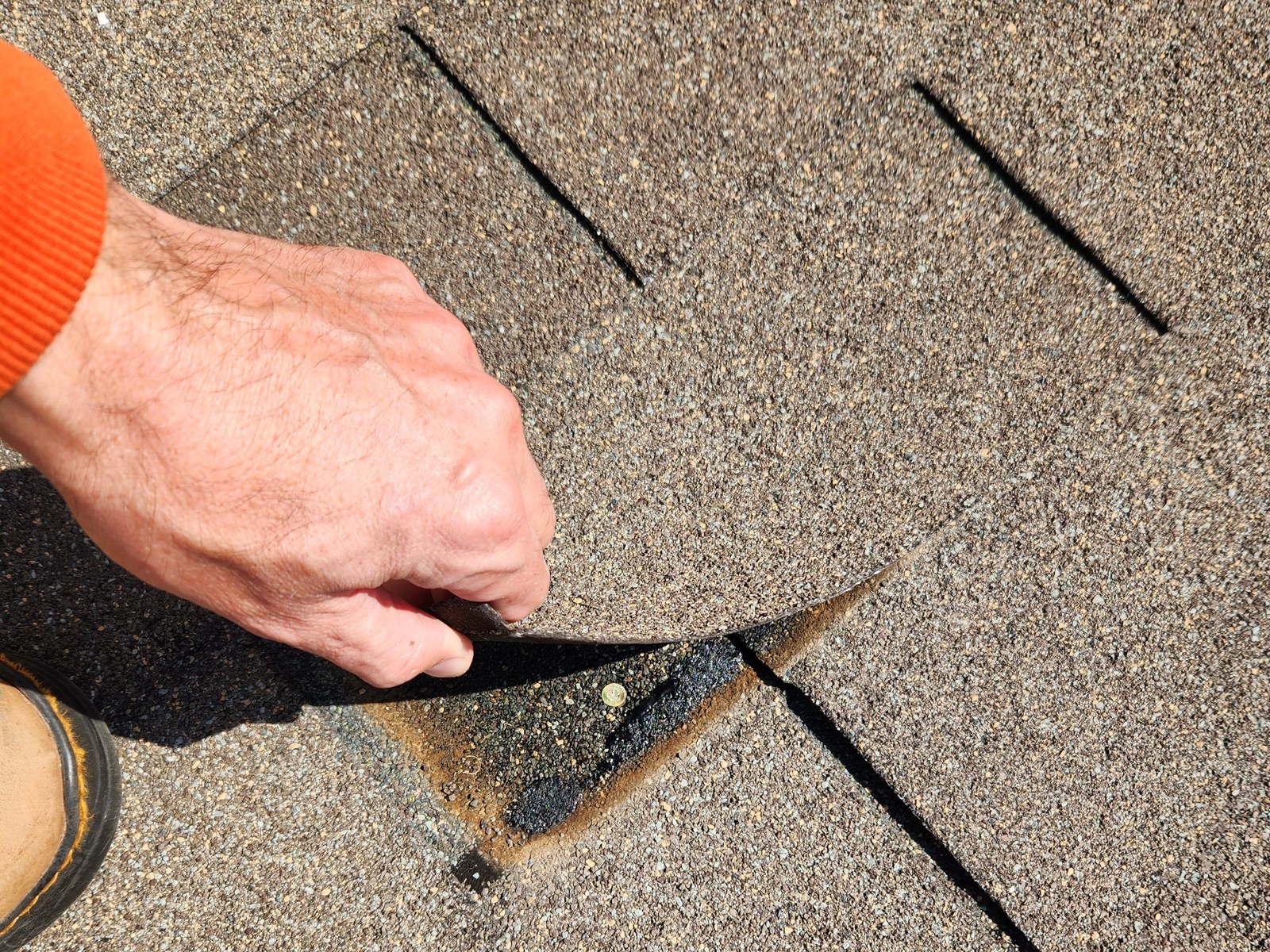
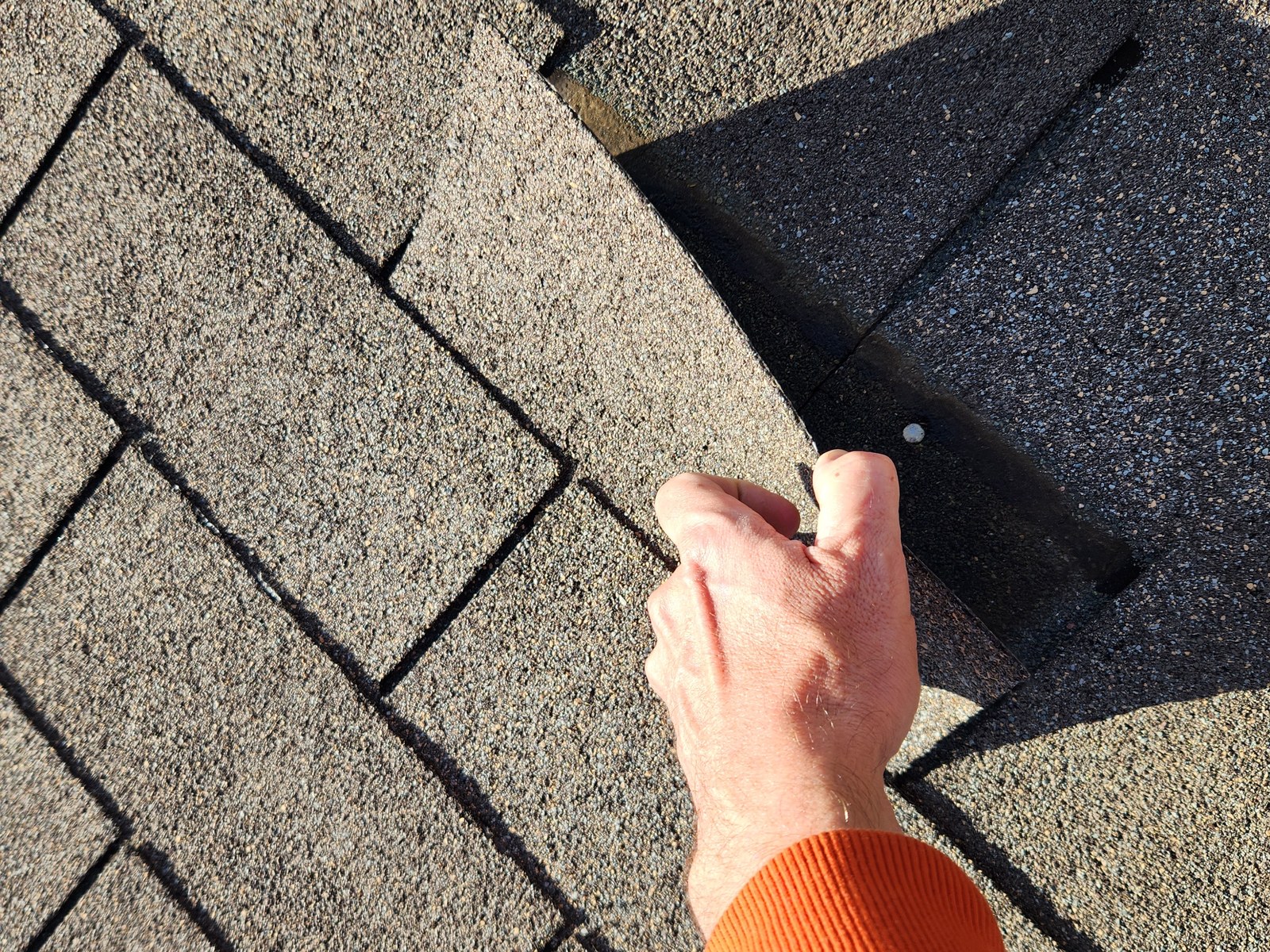
Wind-damaged shingles, Converse, TX
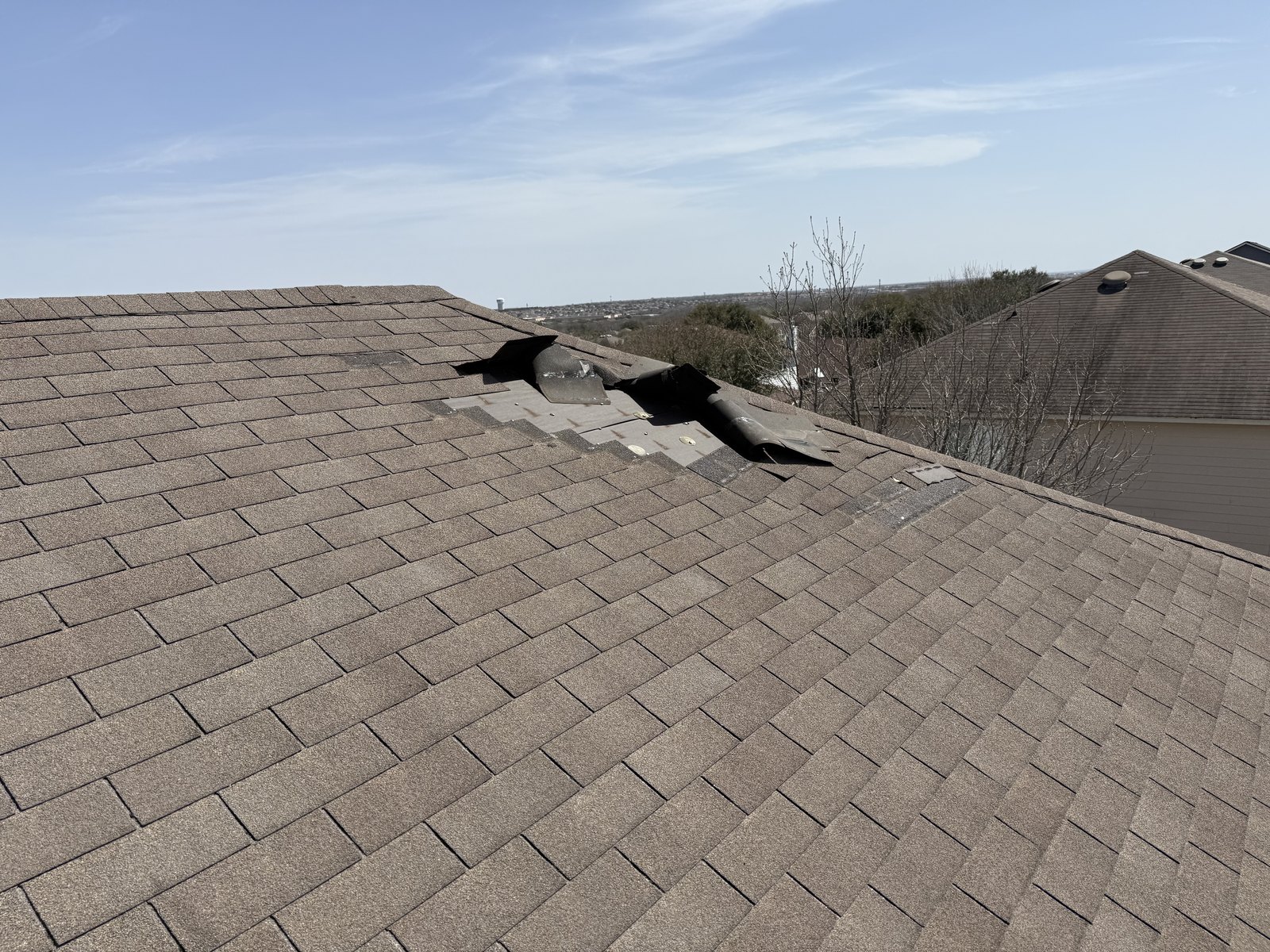
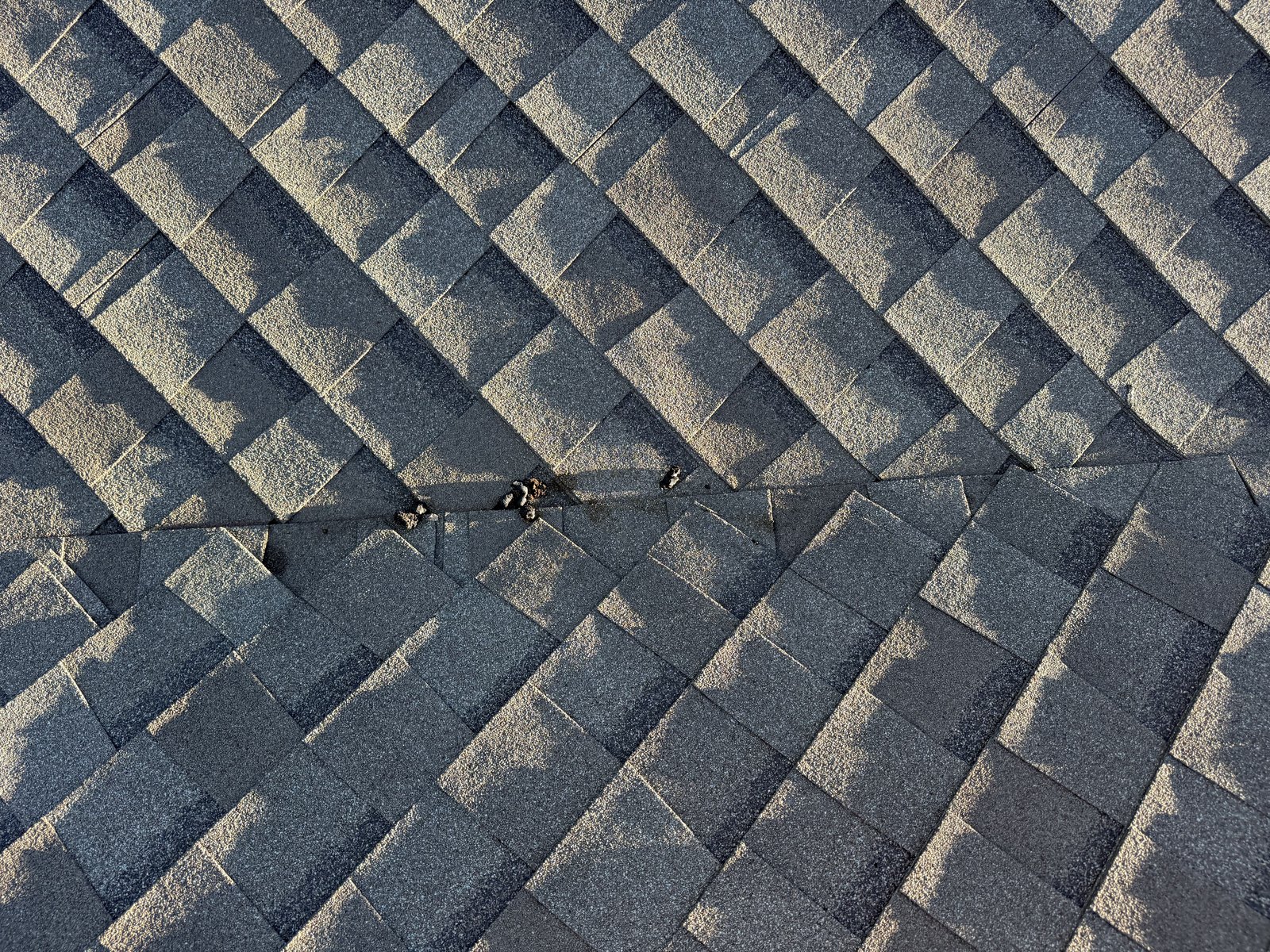
Shingles torn off near the ridge, and a shingle whose seal strip let go. We lift the tabs by hand to check whether they’re still sealed down.
Blown-off shingles, San Antonio, TX
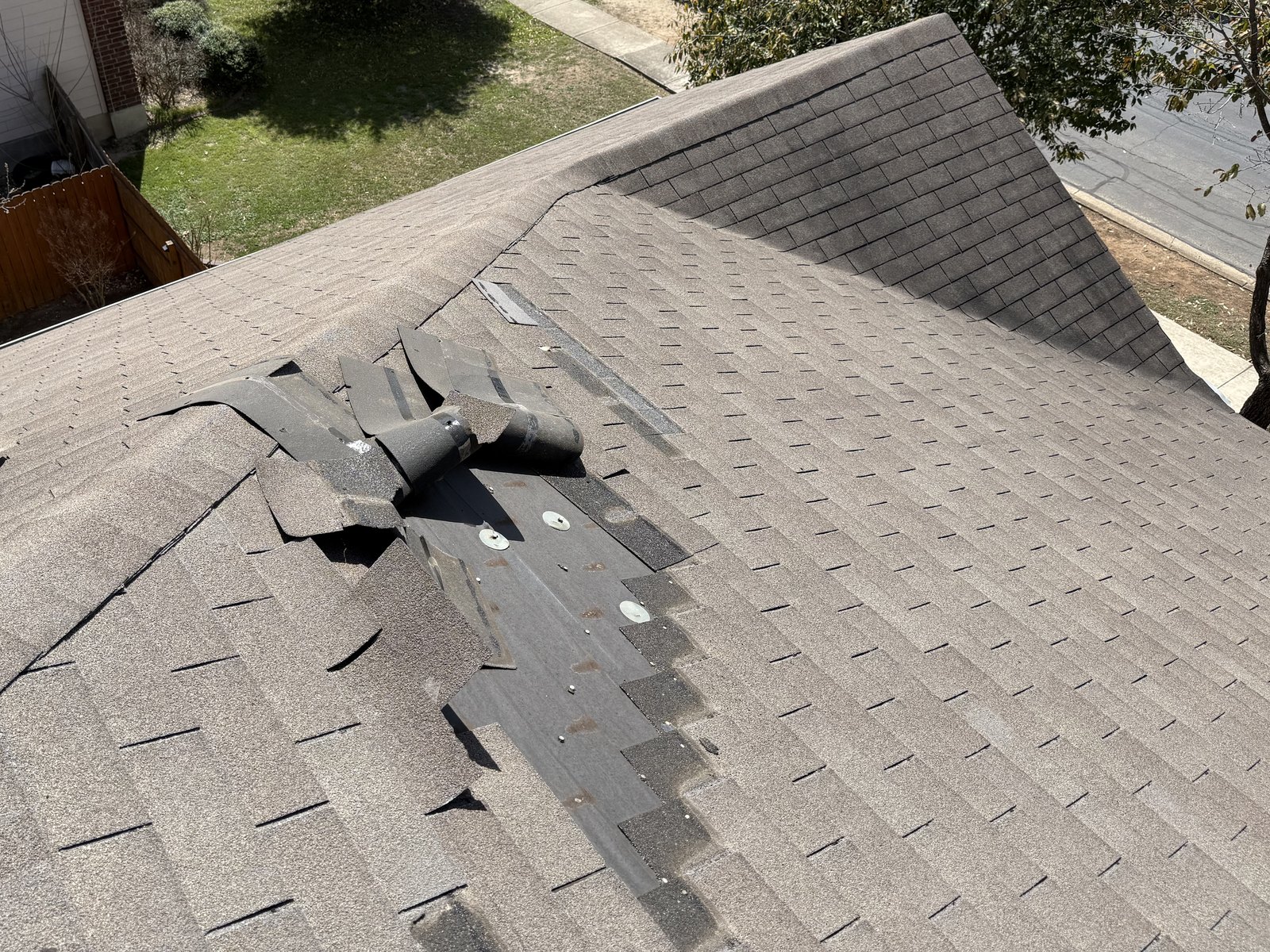
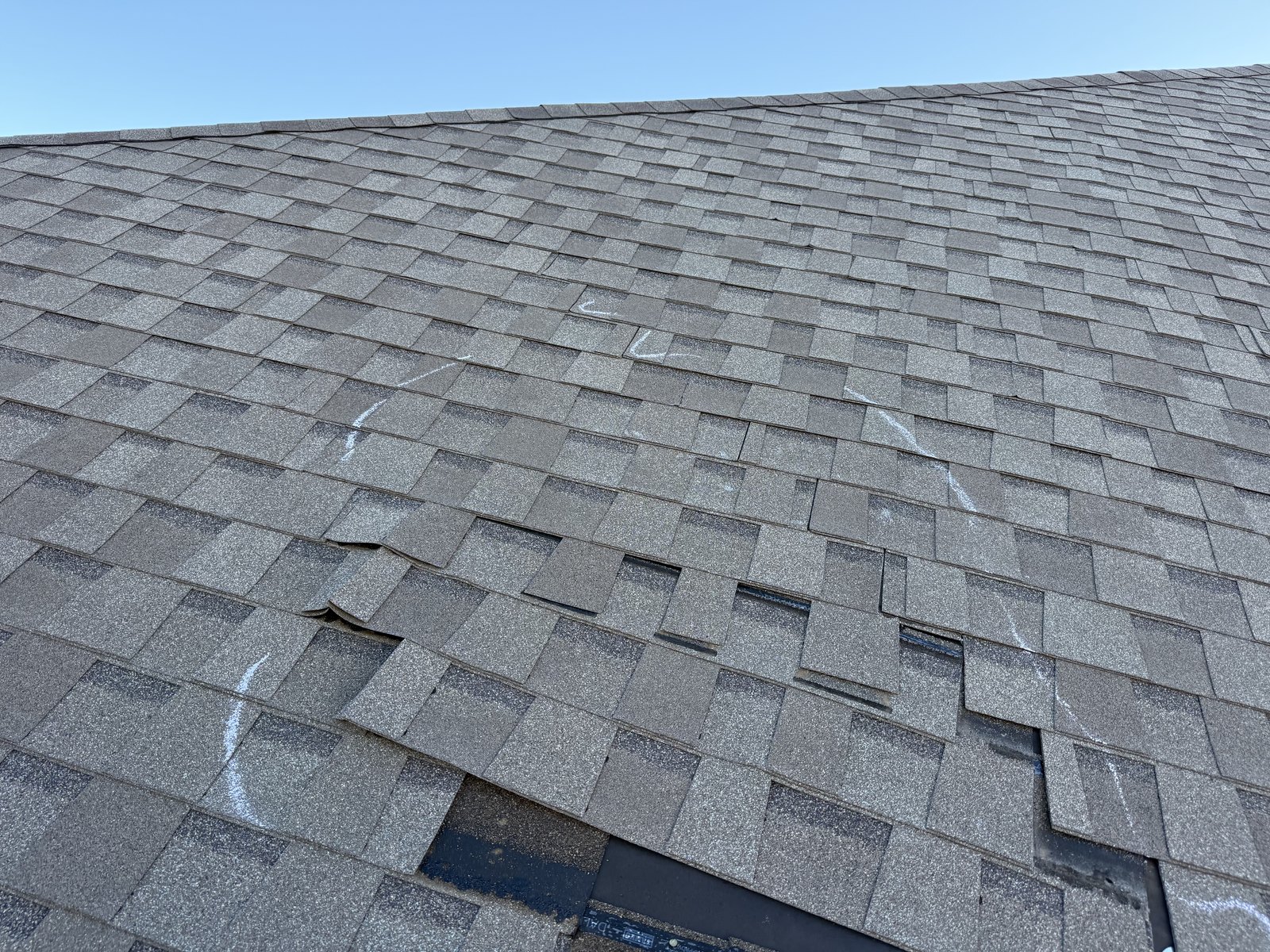
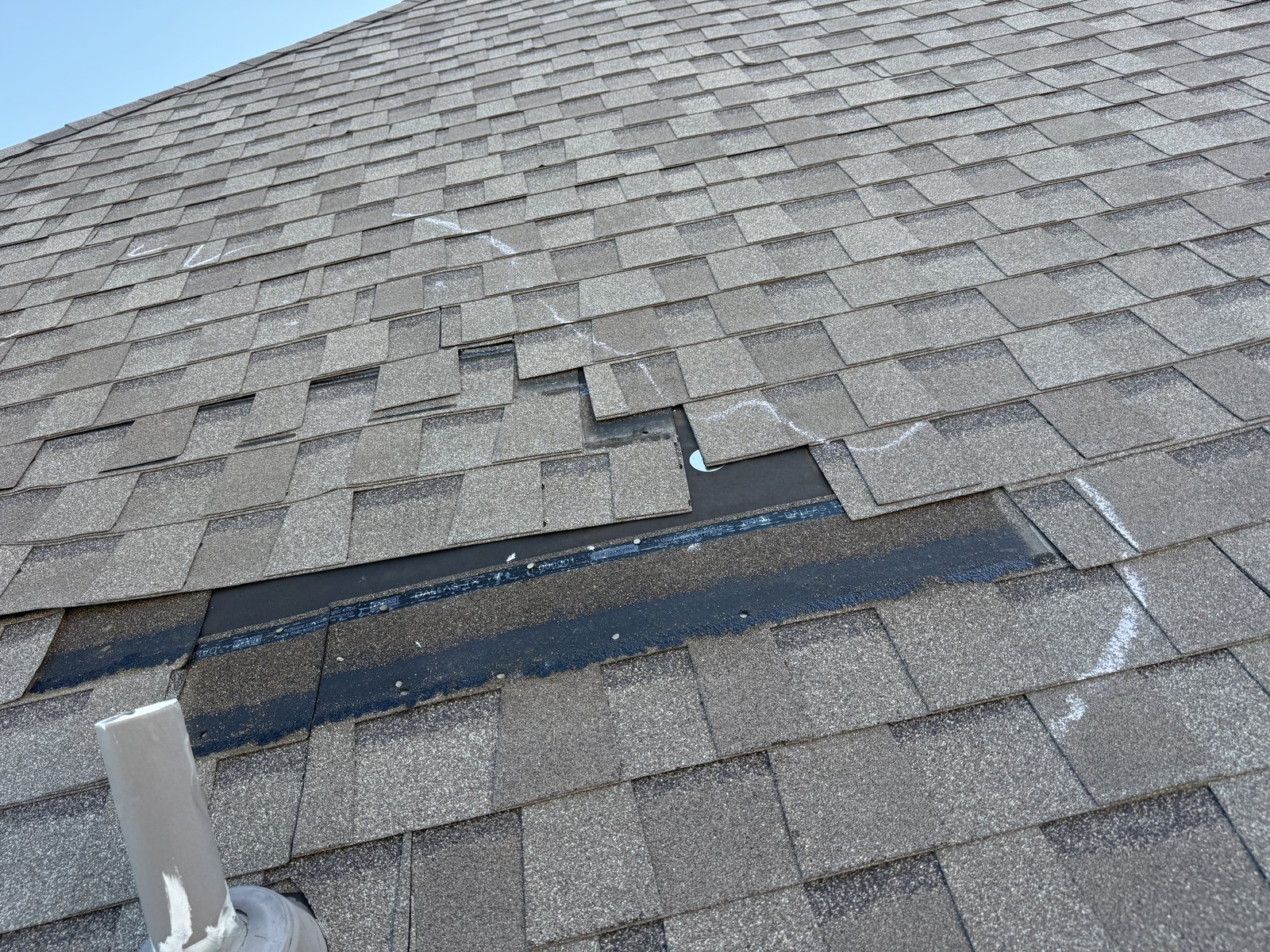
Wind pulled off whole rows of shingles and left the underlayment showing. Shingles next to the missing rows were lifted out of line.
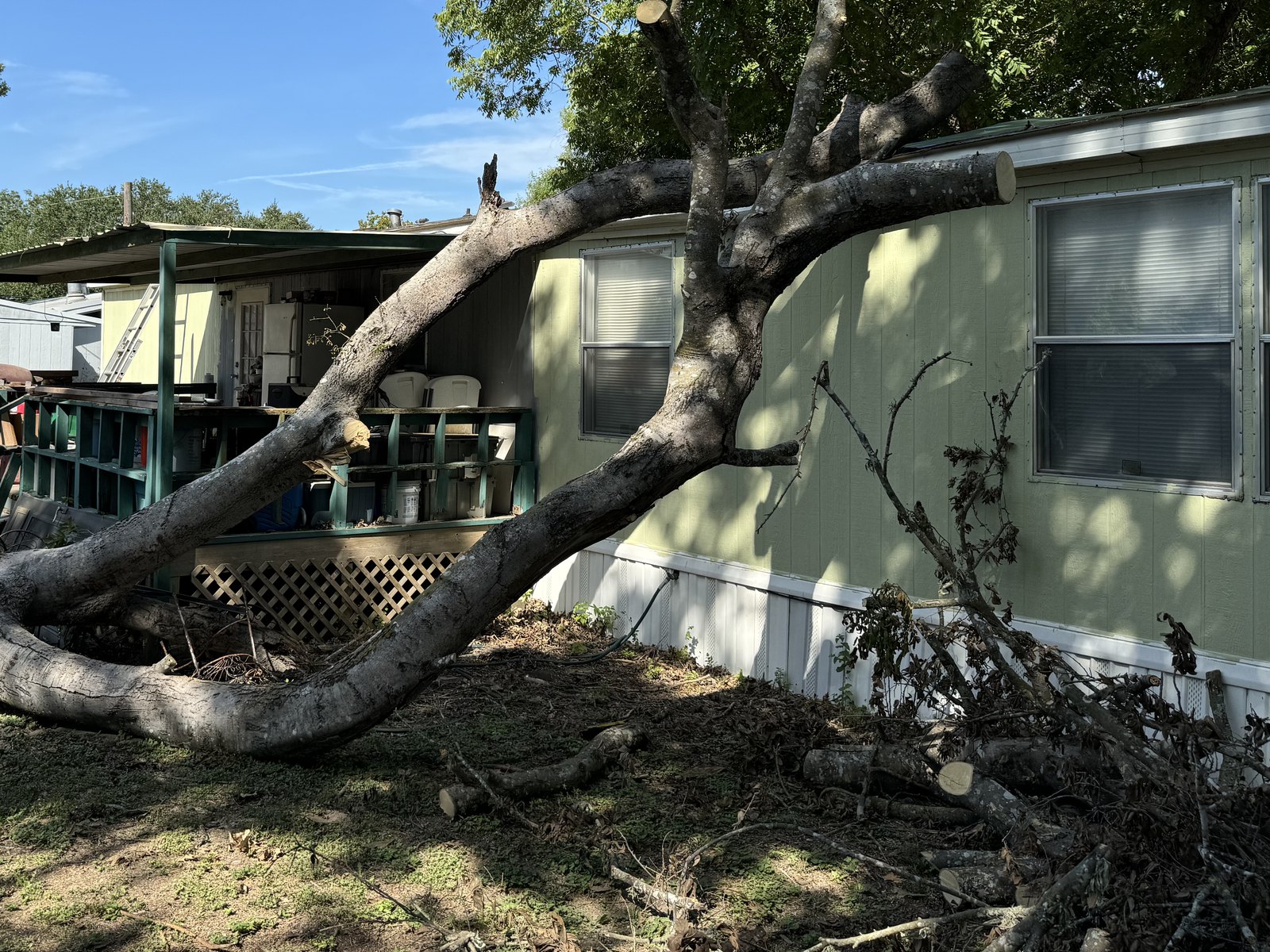
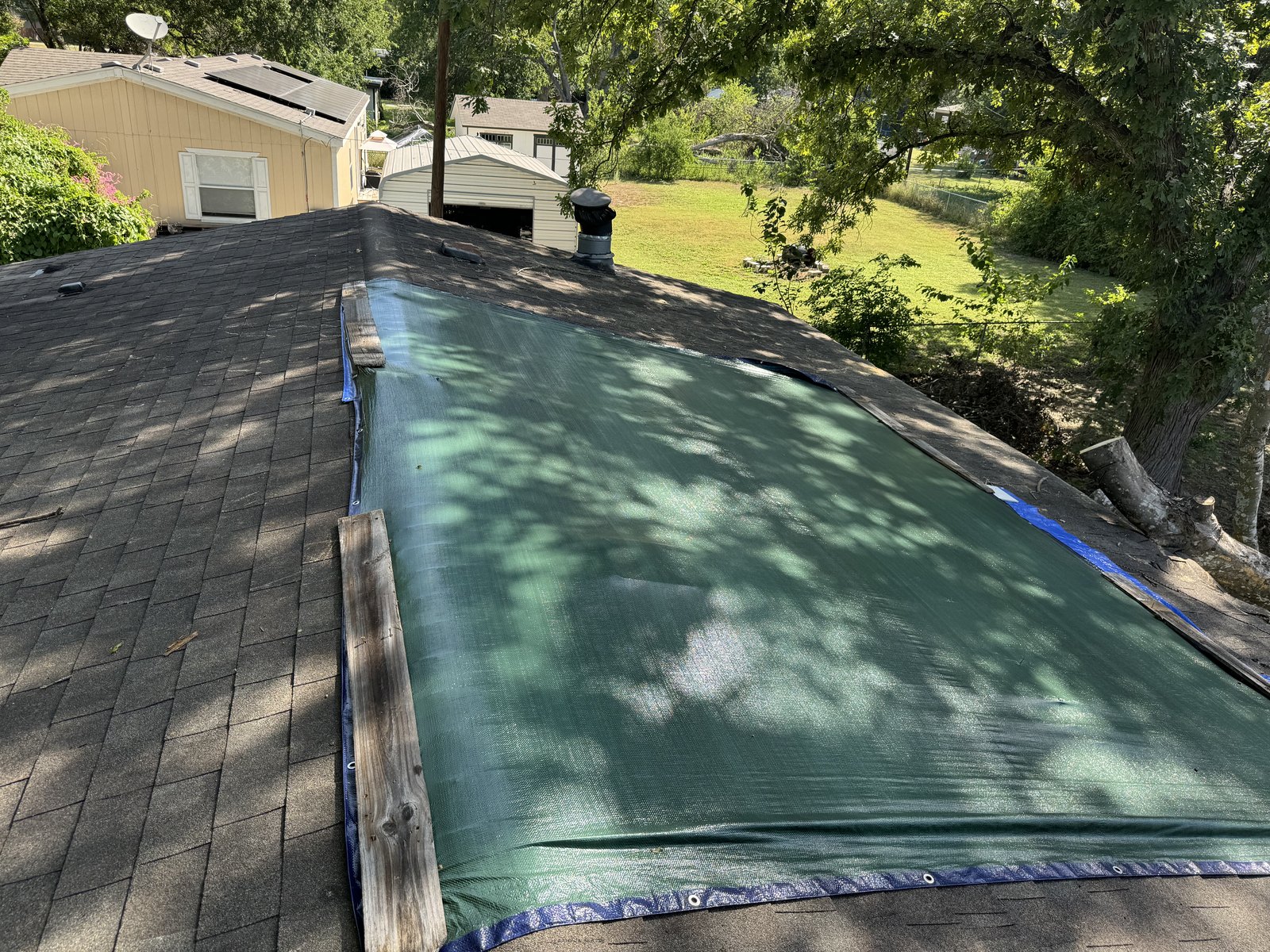
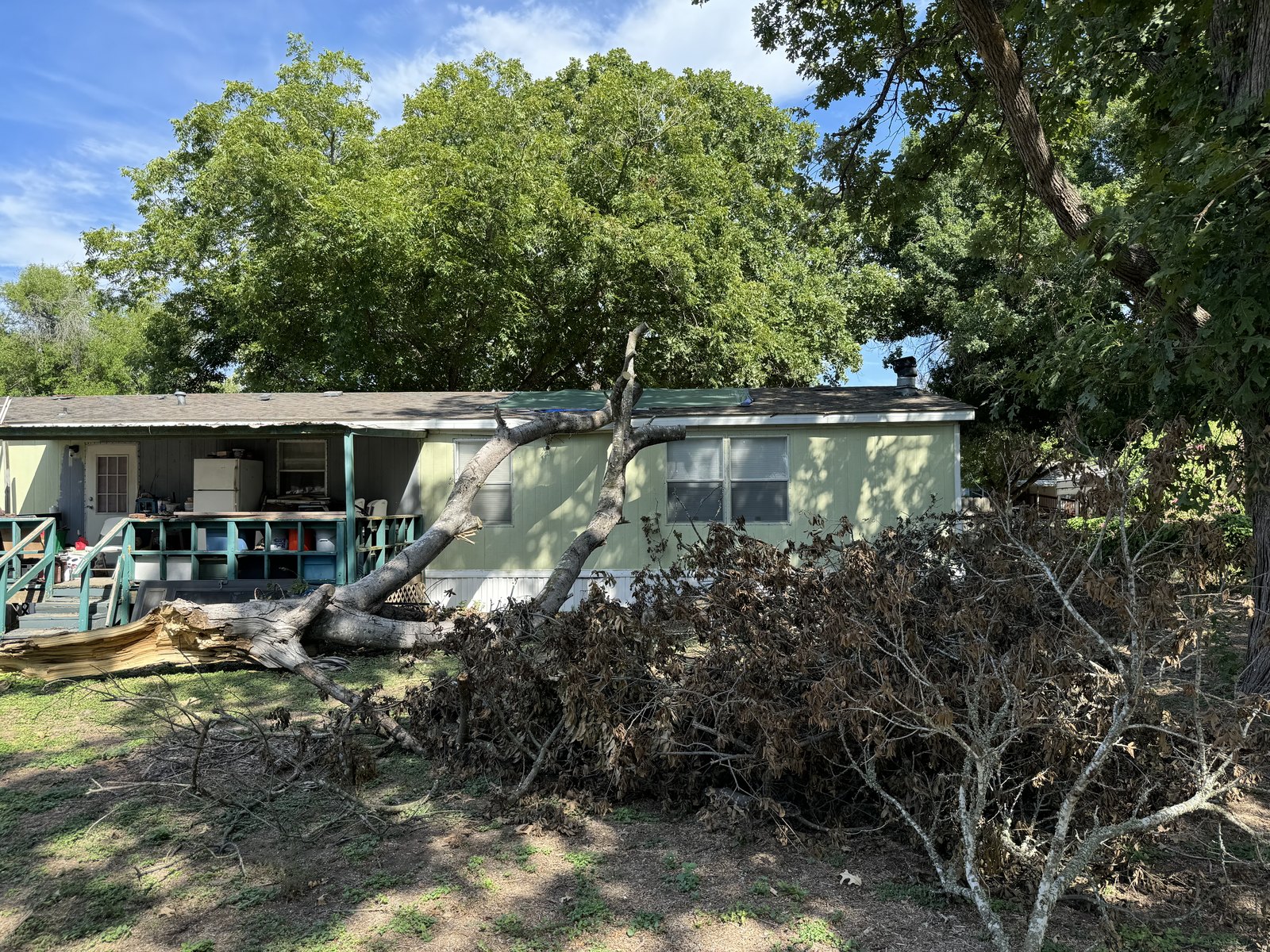
Fallen tree and roof tarp, Guadalupe County, TX
A large tree came down beside this home, and part of the roof was covered with a tarp to keep water out.
After a Windstorm: What to Do
1. Stay safe
2. Take photos from the ground
3. Stop the water
4. Get it inspected
Emergency Roof Tarping
When wind tears off shingles or a limb opens up the roof, the first job is keeping the rain out. We can cover the damaged area with a tarp so water stays out of your attic and ceilings until the roof is repaired.
Call (210) 418-ROOF. If a tree or large limb is still on the roof, it needs to come off before the roof can be tarped.
Repair or Replace?
A few missing or creased shingles can often be repaired. If wind damage is spread across several slopes, or the shingles are old enough that they no longer seal well, a replacement may make more sense than fixing it one shingle at a time. Either way, you’ll see the photos before you decide.
- A few shingles or a leak? See Roof Repair.
- Damage across the roof? See Roof Replacement.
- Metal panels or trim lifting, or thinking about metal? See Metal Roofing.
Wind Damage and Insurance
Whether wind damage is covered depends on your policy and your deductible. If you’re thinking about filing, our insurance claims page walks through how the process works. We can inspect and photograph the damage first, so you know what you’re dealing with. Need help filing? We’ll walk you through starting the claim and give you our photos and a written estimate for your insurer.
Hail with the wind? See Hail Damage Roof Repair.
Wind Damage FAQ
How strong does the wind have to be to damage a roof?
Can a lifted shingle just be glued back down?
Why did only a few shingles blow off?
Can wind damage show up later?
Can wind damage a metal roof?
Should I get a branch off my roof myself?
Start With a Free Roof Inspection
We check your roof and show you what we find. See what the inspection covers, or check the areas we serve.
Wind Damage? Call 418-ROOF
Family-owned and based in San Antonio, with over 10 years of roofing experience. Serving San Antonio, Garden Ridge, New Braunfels, Boerne, Schertz, Cibolo, Seguin, Helotes, LaCoste and the Texas Hill Country, including Wimberley.
Prefer to text? Text (210) 418-7663
