
Metal Roofing in San Antonio & the Hill Country
Double-lock standing seam and R-panel metal roofs built for Texas heat and hail, from a crew with over 10 years of roofing experience.
Clean lines, hidden fasteners
A free, photo-backed inspection
Storm damage help
Types of Metal Roofs
Metal roofing comes in two main families, and they’re built for different jobs. We install both, formed from McElroy Metal coil, and we’ll show you each one and explain the trade-offs before you decide.
Double-lock standing seam (concealed fastener)
We buy McElroy Metal coil and form each panel to the exact length of your roof on site, so most runs go ridge to eave with no end laps. Each panel is held down by clips hidden underneath, so no fasteners are exposed to sun and rain.
We close every seam with a mechanical seamer that folds it over twice. The double lock makes a stronger seam that holds up better to wind uplift and resists leaks, which matters most on lower-slope roofs.
The clips also let the metal expand and contract as it heats and cools, which matters here, where roofs bake all summer. It’s the cleanest look and the longest-lasting option, and it’s what most homeowners picture when they think of a Hill Country metal roof.
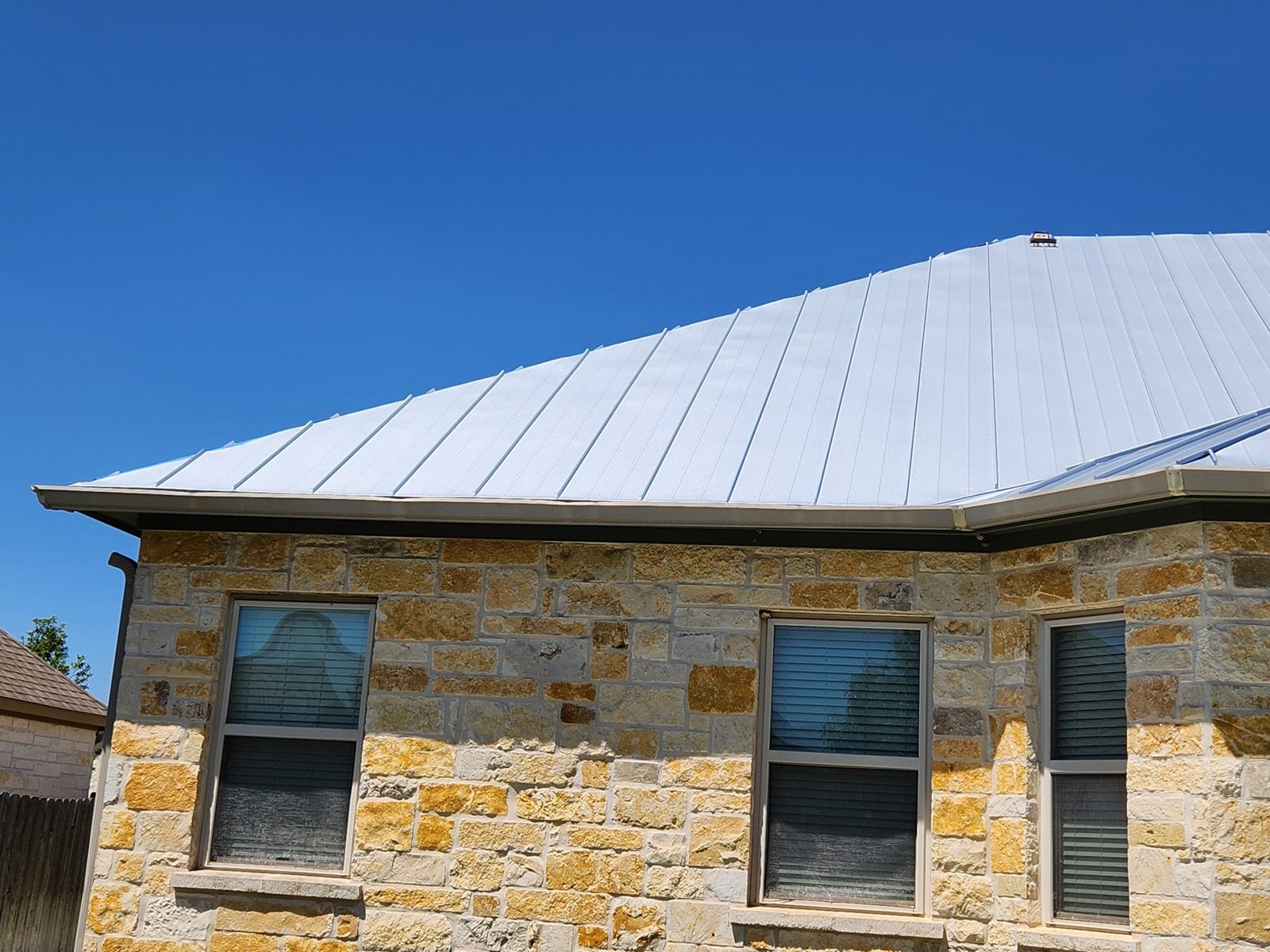
Fredericksburg, TX
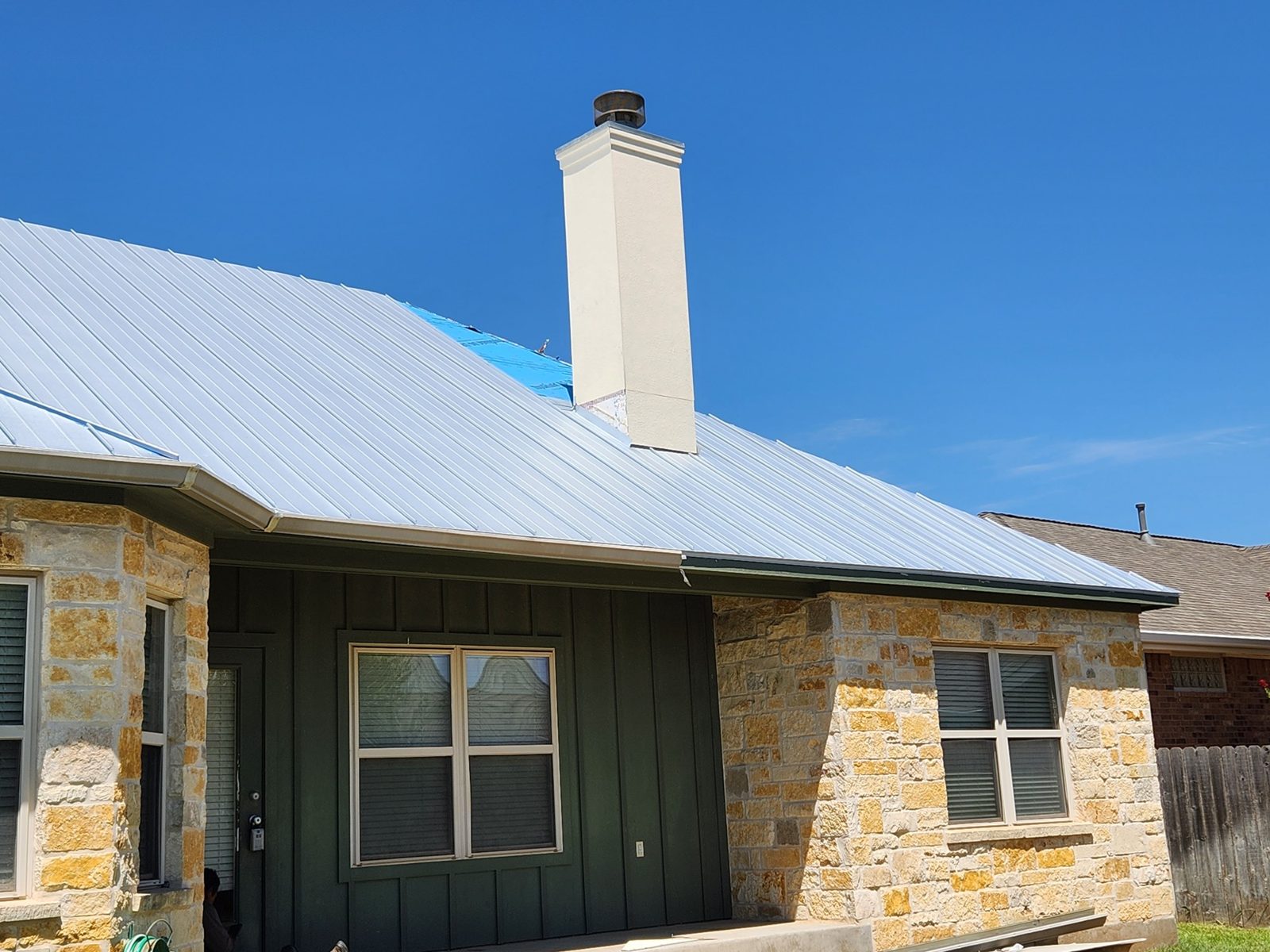
Fredericksburg, TX
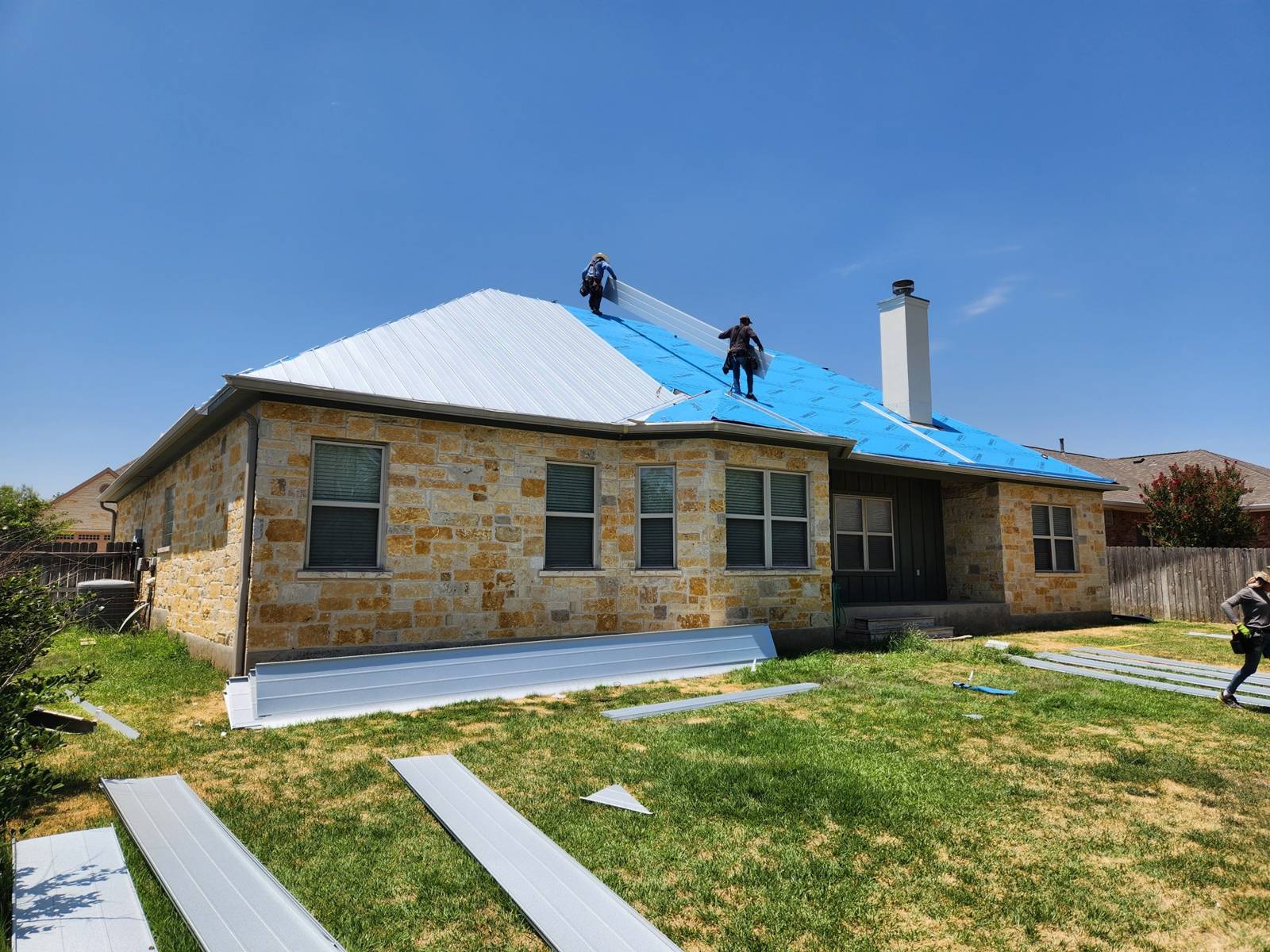
Install in progress, Fredericksburg, TX
Exposed-fastener R-panel
R-panel sheets overlap and are screwed through the face, with rubber-washer screws holding them down. They cost less and go on faster, which is why they’re common on barns, shops and some homes. The trade-off is upkeep: thousands of exposed washers age in the sun, and the screws usually need checking and some replacing over the life of the roof.
What to compare on any metal roof
- Gauge (thickness). A lower number means thicker steel. 24-gauge is the usual standard for standing seam. It’s stiffer, resists dents and waviness (“oil canning”) better, and is more often engineering-tested. 26-gauge costs a bit less and is common on homes and R-panel.
- Steel coating. Most residential panels are Galvalume steel, which has a zinc-aluminum coating that protects it from rust. You can leave it bare, with the natural silver finish, or have it painted.
- Paint finish. The top tier is PVDF, sold under names like Kynar 500® and Hylar 5000®. It holds its color and resists chalking much longer than economy SMP (silicone-modified polyester) paint. Ask which paint is on any quote you get.
- Colors. Lighter and “cool” colors reflect more sun. We’ll bring color samples to your estimate.
Backed by McElroy warranties
Our panels are formed from McElroy Metal coil, backed by McElroy’s paint and steel warranties. Terms depend on the paint system and color; we’ll give you the exact warranty for your roof with your estimate.
Why Metal in South Texas
San Antonio and Hill Country roofs deal with long, hot summers, spring hail and sudden downpours. Metal handles all three well, though it isn’t the right fit for every home or budget. Here’s an honest look.
- Long service life. Well-installed metal roofs are commonly expected to last 40 to 70 years, compared with roughly 15 to 30 for asphalt shingles. How long yours lasts depends on the panel, the coating and the installation.
- Less heat into the attic. Reflective metal roofs stay cooler in the sun. The U.S. Department of Energy says a cool roof in a hot climate can cut a single-story home’s air-conditioning energy use by up to 15%. Light colors and “cool” paint finishes do the most.
- Stands up to hail. Many metal panels are rated Class 4 under UL 2218, the highest impact rating. That test measures whether hail breaks through the panel, not whether it dents, so heavy hail can still leave dents.
- Sheds rain fast. Smooth panels and tight seams move water off the roof quickly during our heavy storms.
- Fire resistant. Metal doesn’t burn, which counts for homes near brush and cedar.
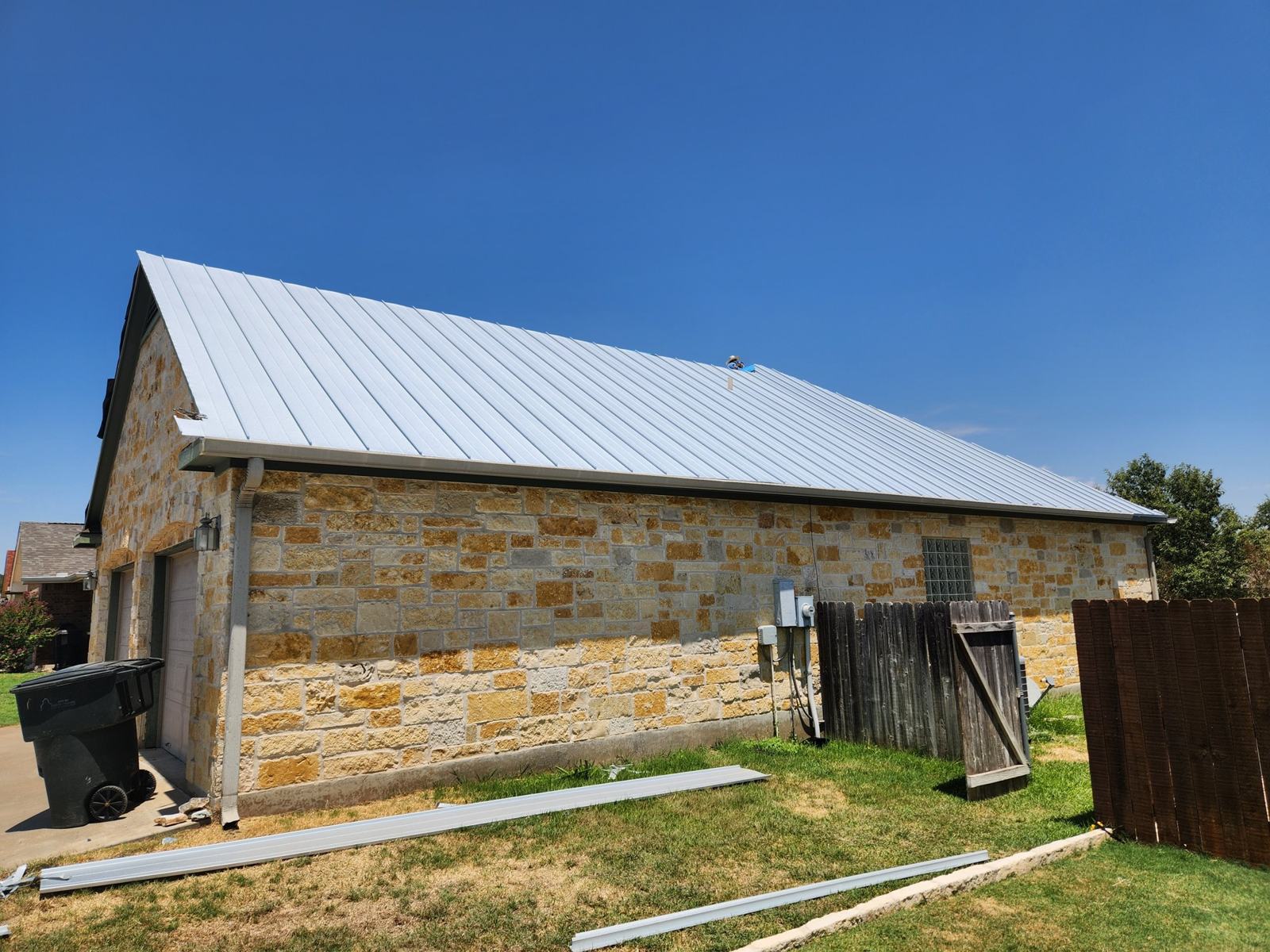
- Fits the look. Standing seam pairs naturally with limestone, ranch and farmhouse homes across the Hill Country.
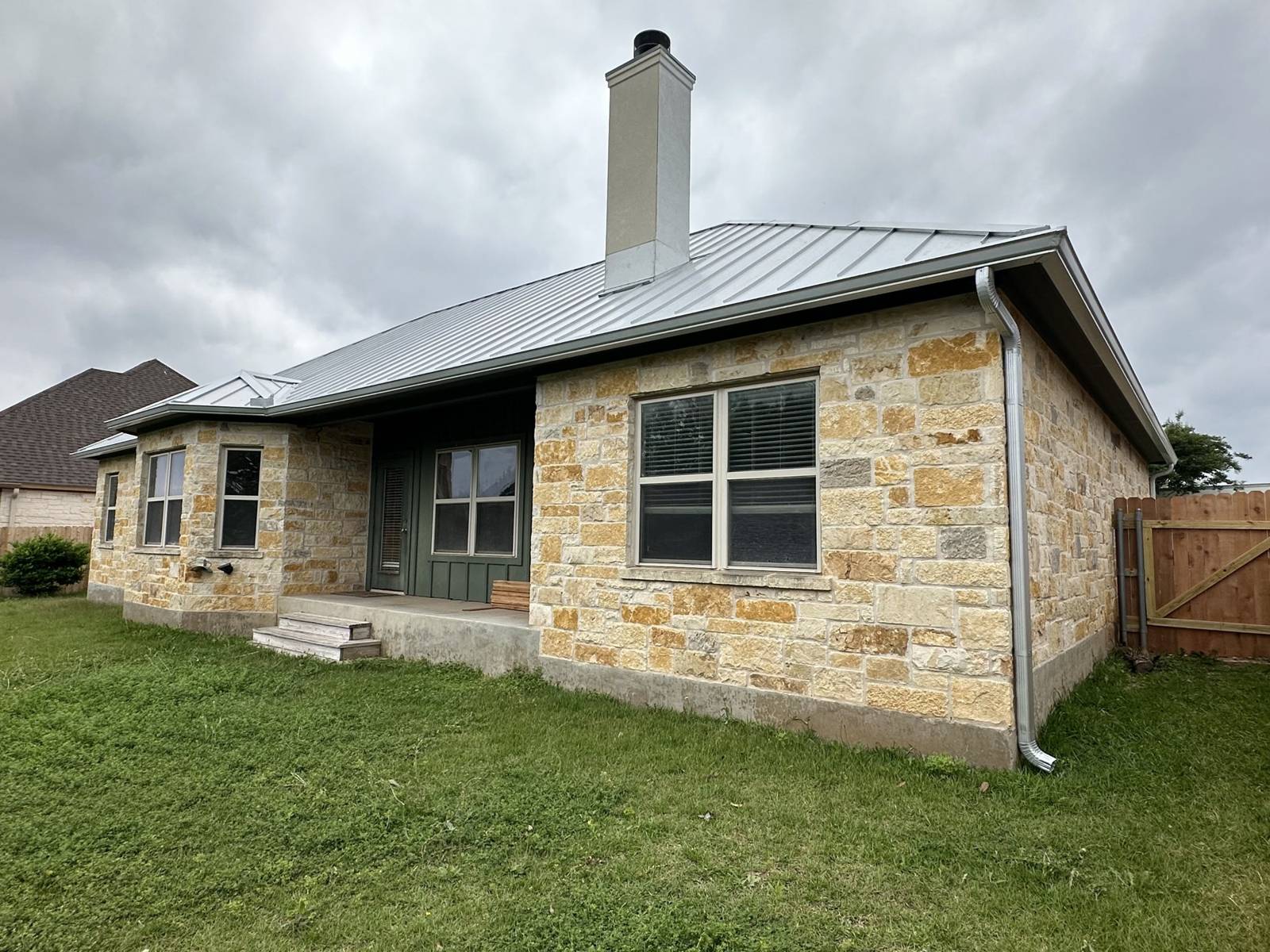
The trade-offs
- Cost. Metal costs more upfront than shingles. Over the long run it can work out cheaper per year, especially if you plan to stay in your home.
- Dents and insurance. Some Texas insurers give a premium discount for impact-rated roofs, but the amount varies by company, and the discount can come with a cosmetic-damage exclusion for dents that don’t cause leaks. Talk to your agent before you choose a roof.
Our Process
1. Free inspection
2. Written estimate
3. Choose your options
4. Installation
5. Clean-up and walk-through
Financing available — ask about it with your free estimate.
Recent Metal Roofs
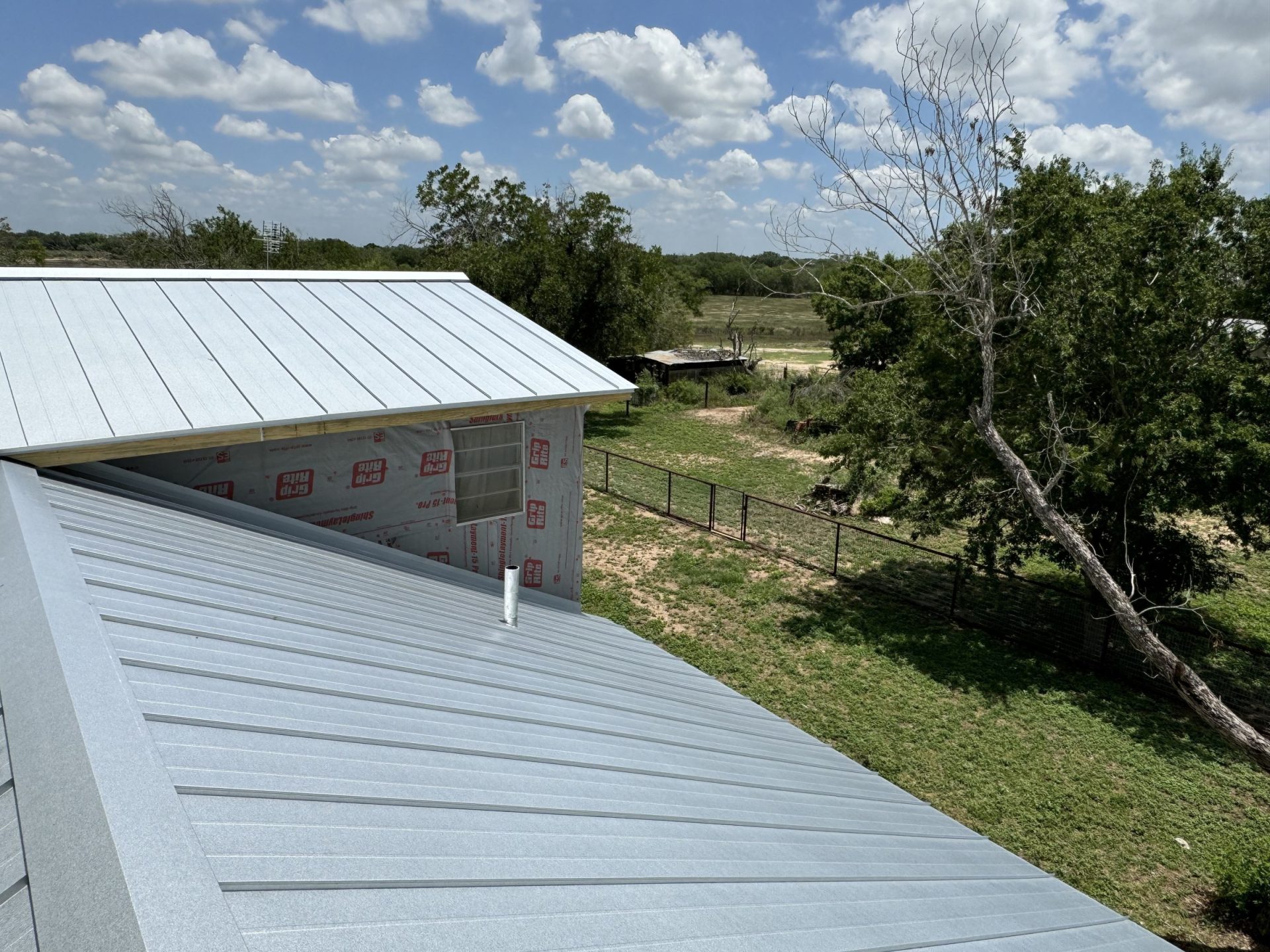
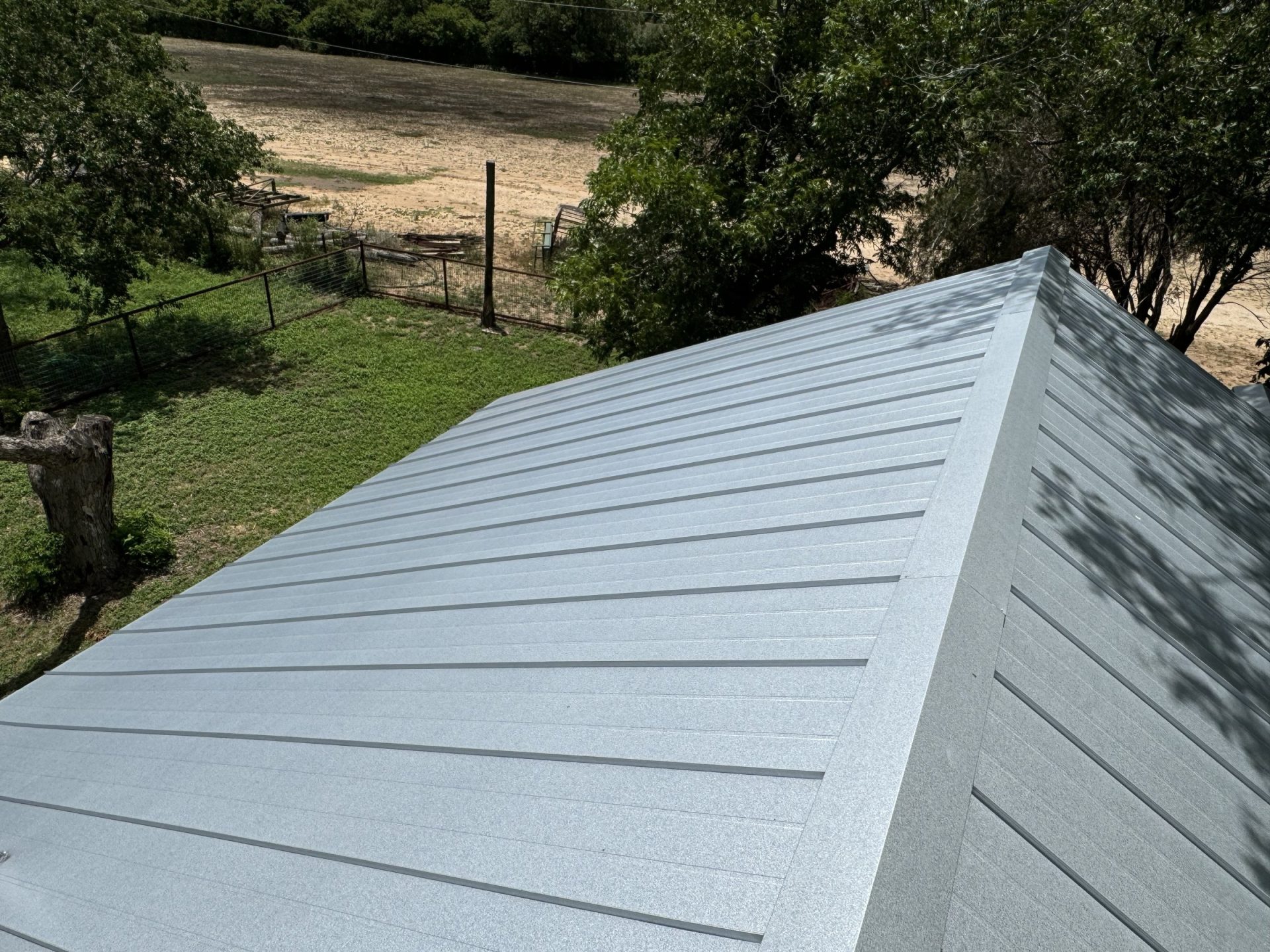
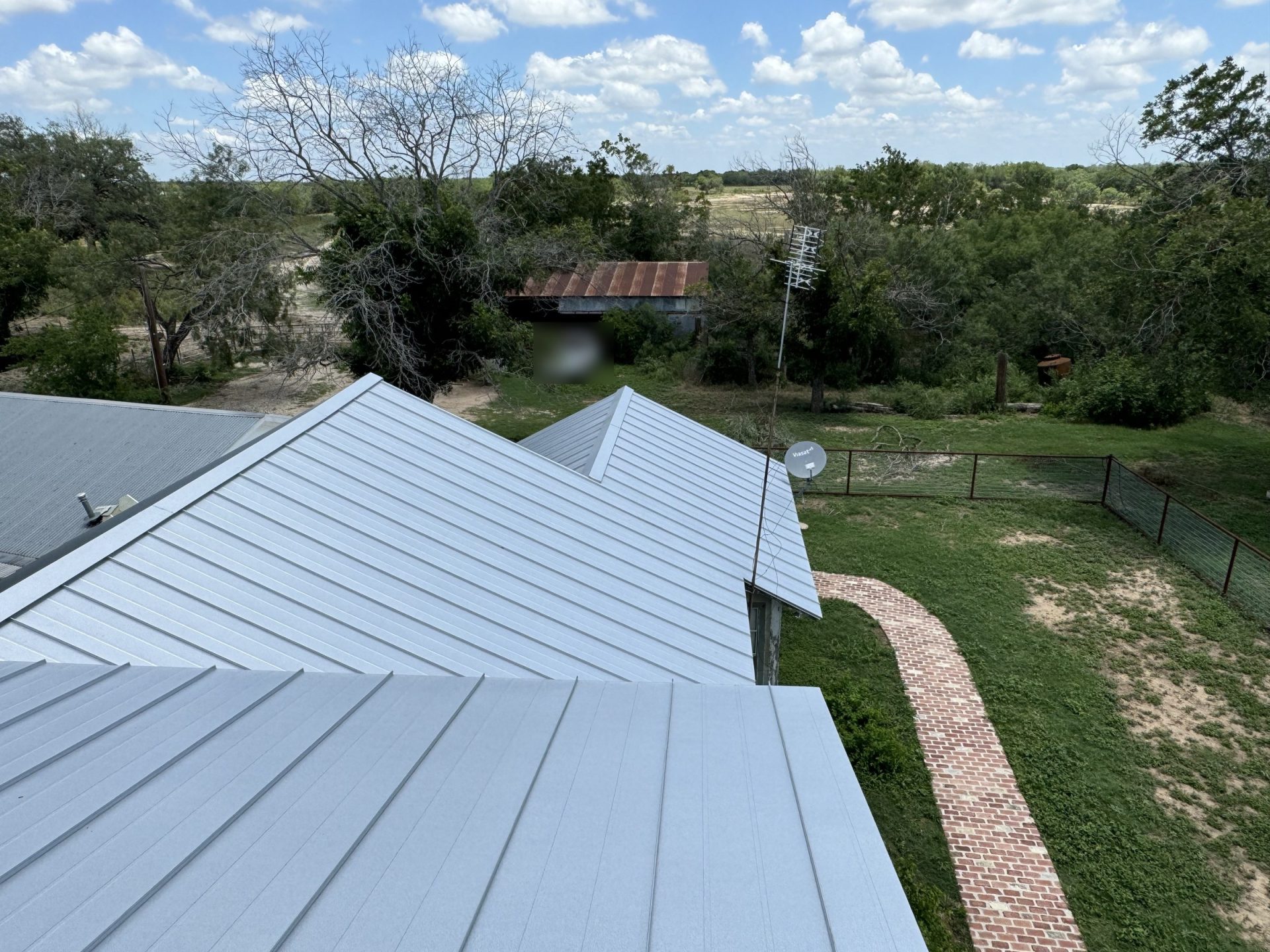
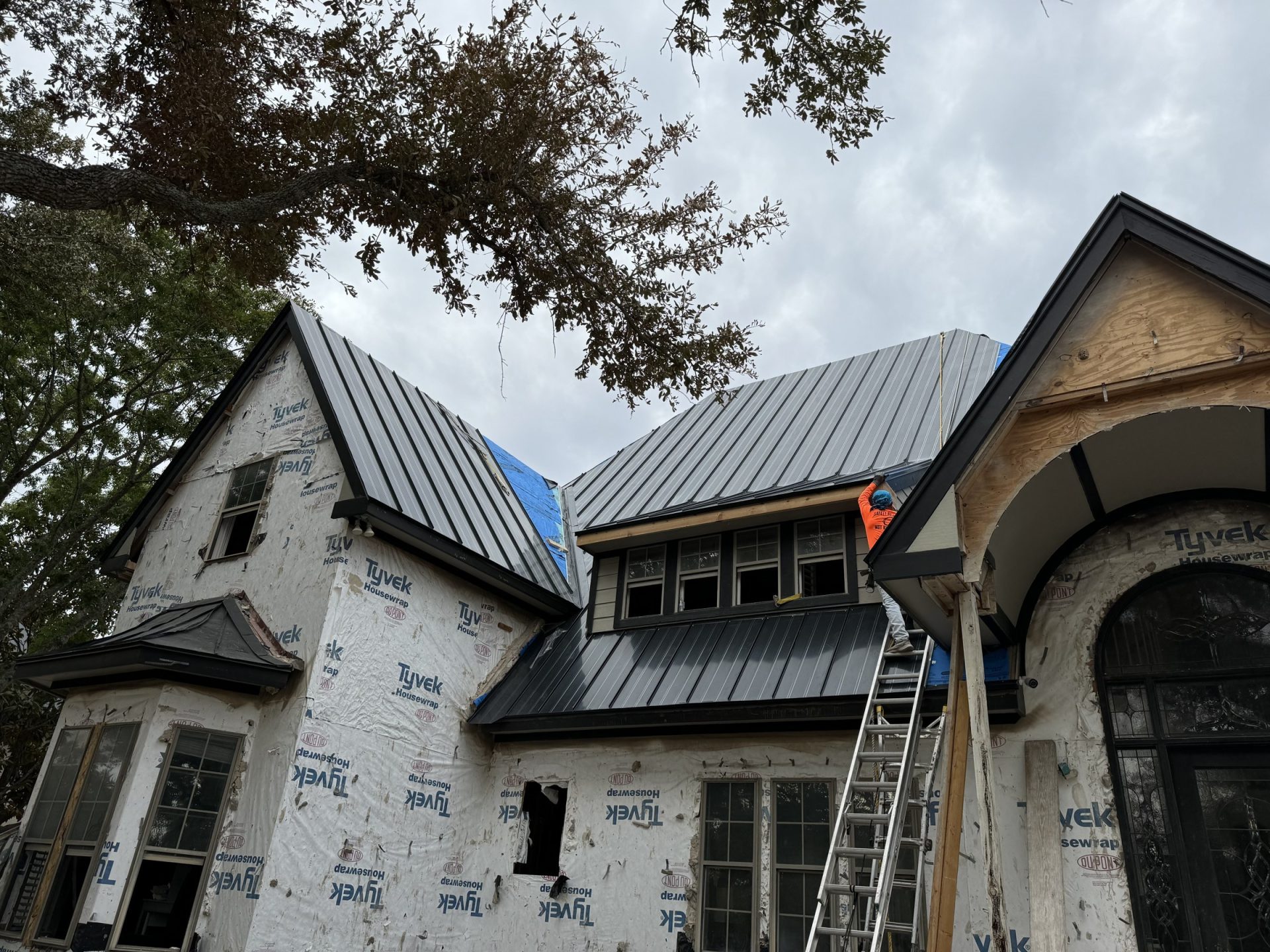
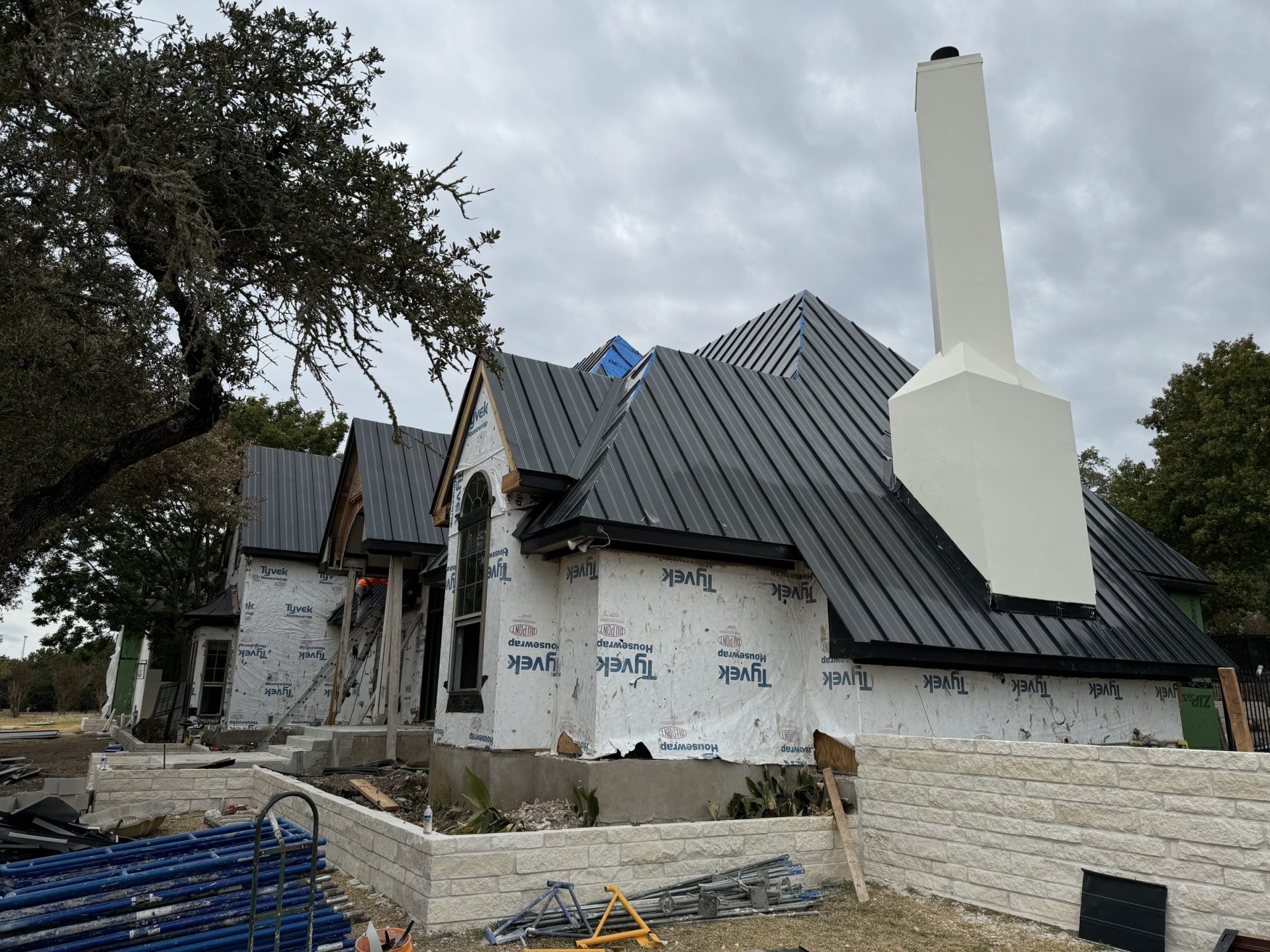
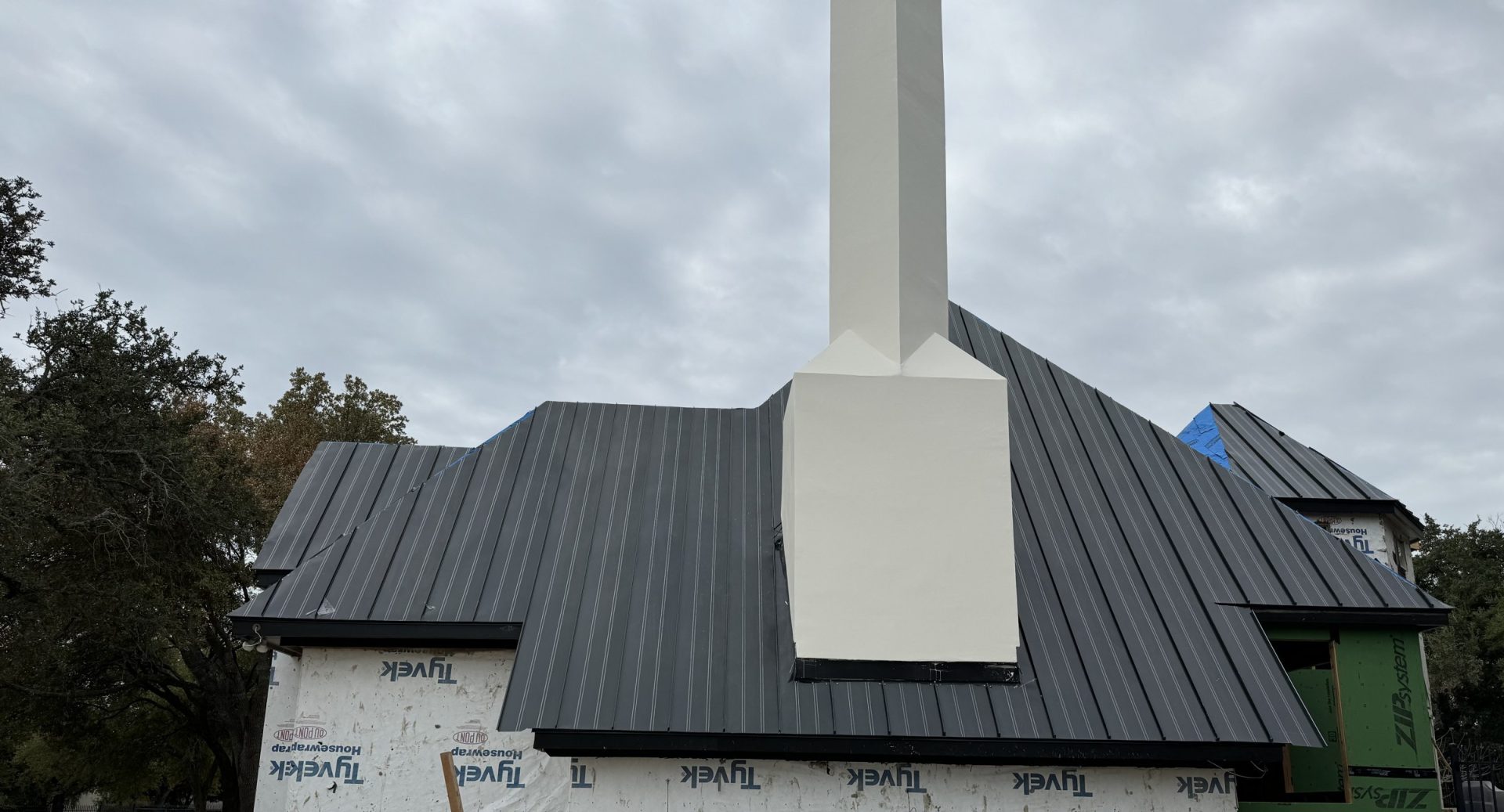
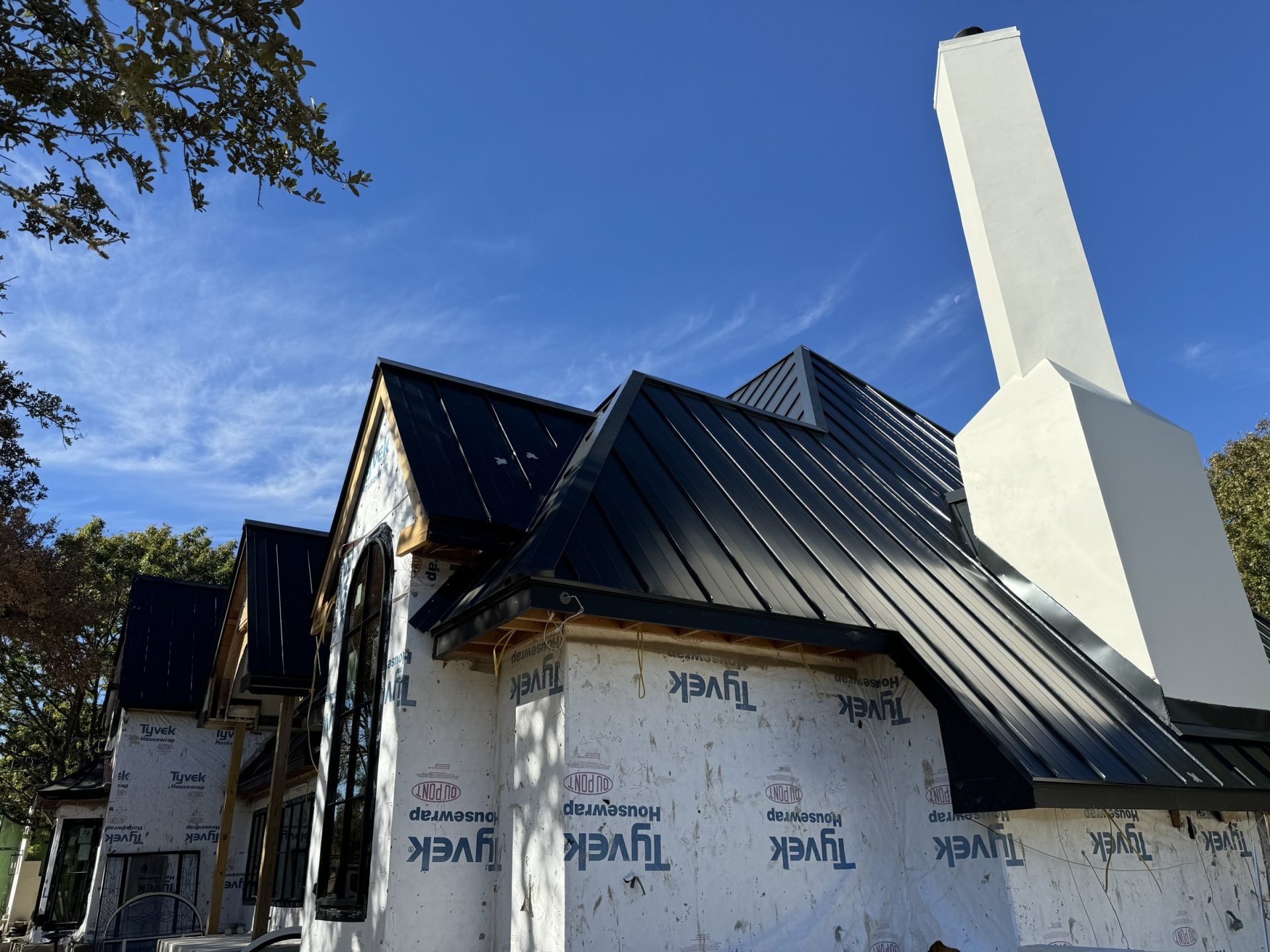
A few of the metal roofs we’ve installed around San Antonio and the Hill Country.
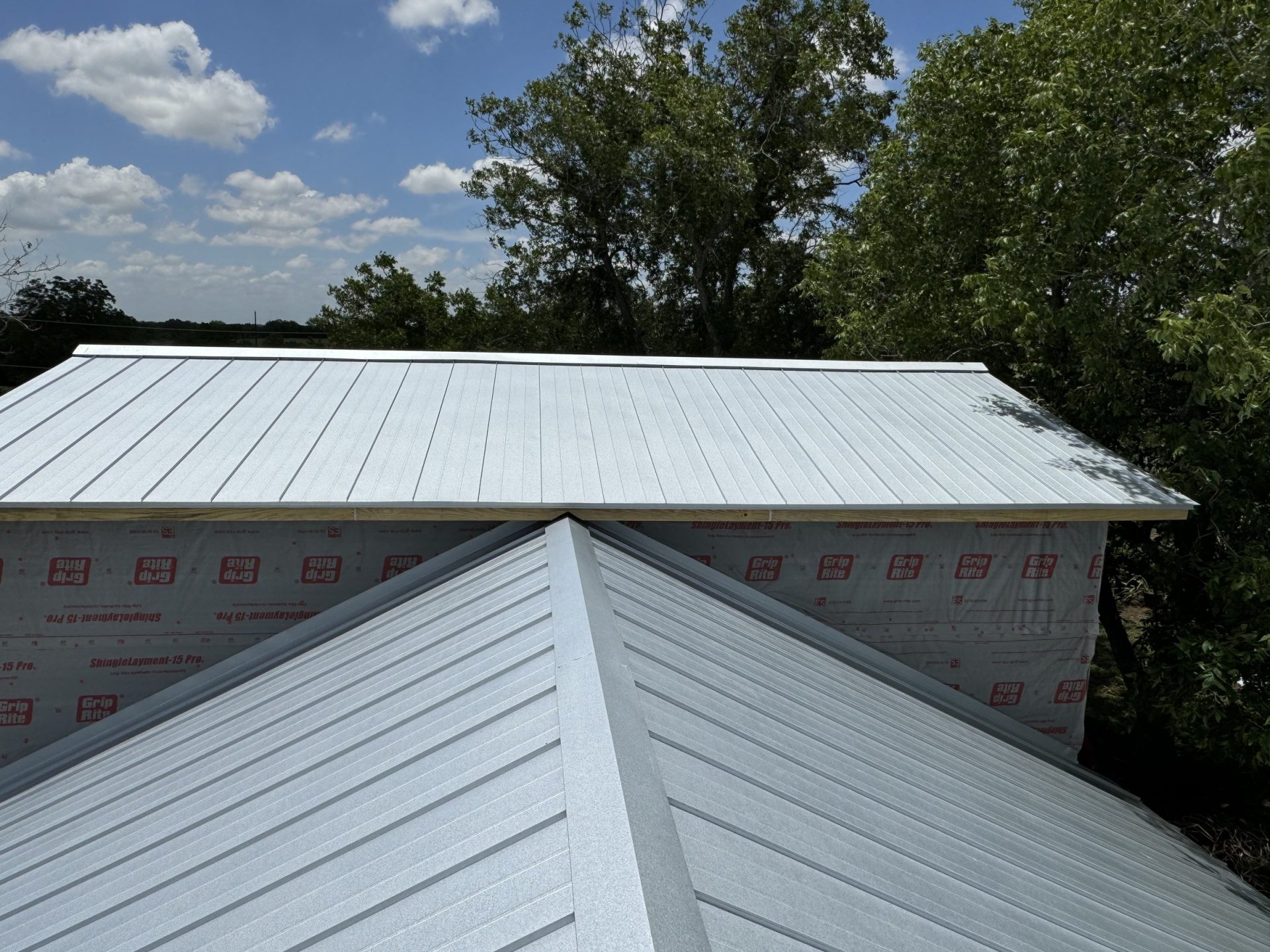
Natalia, TX
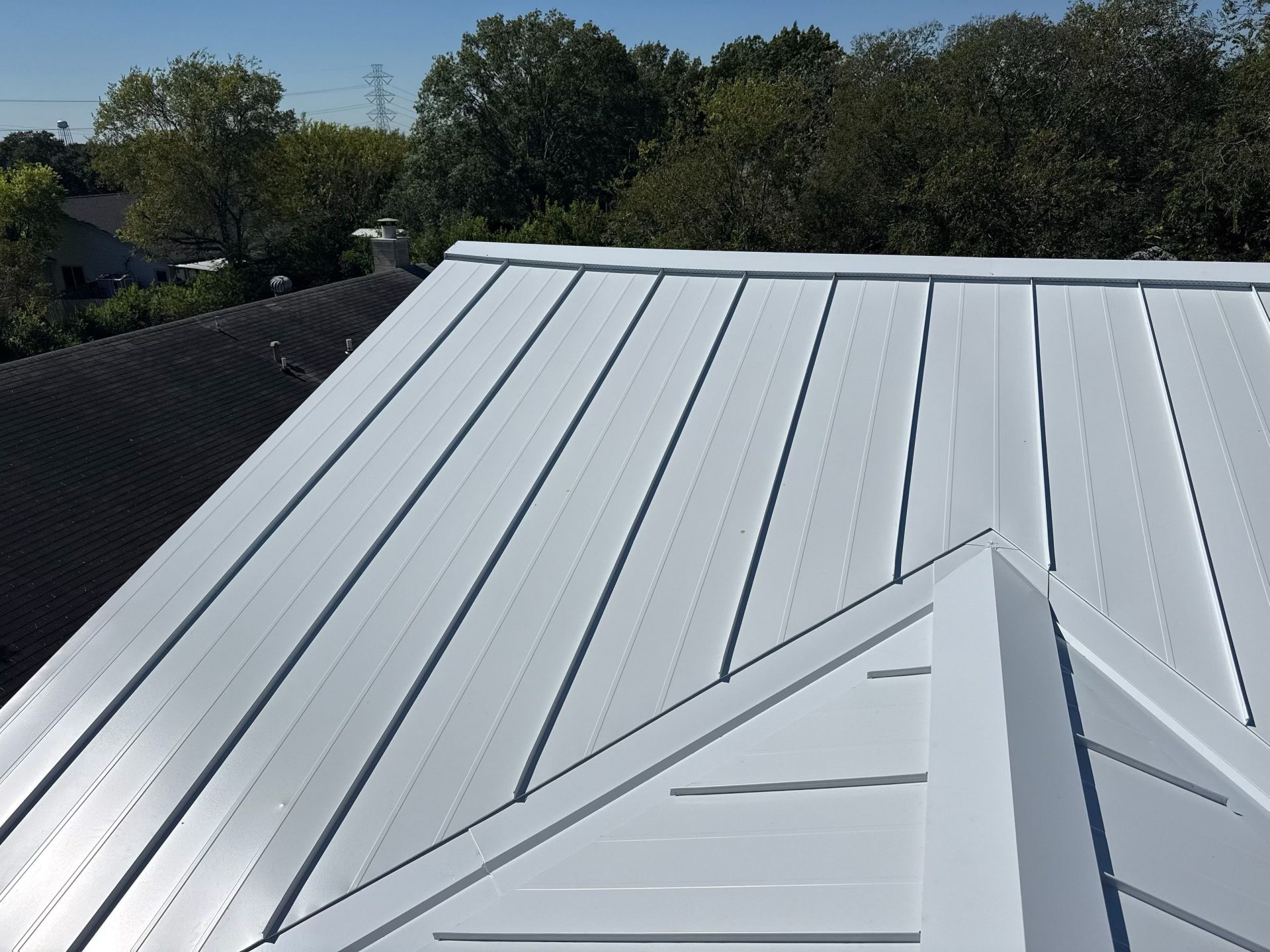
San Antonio, TX
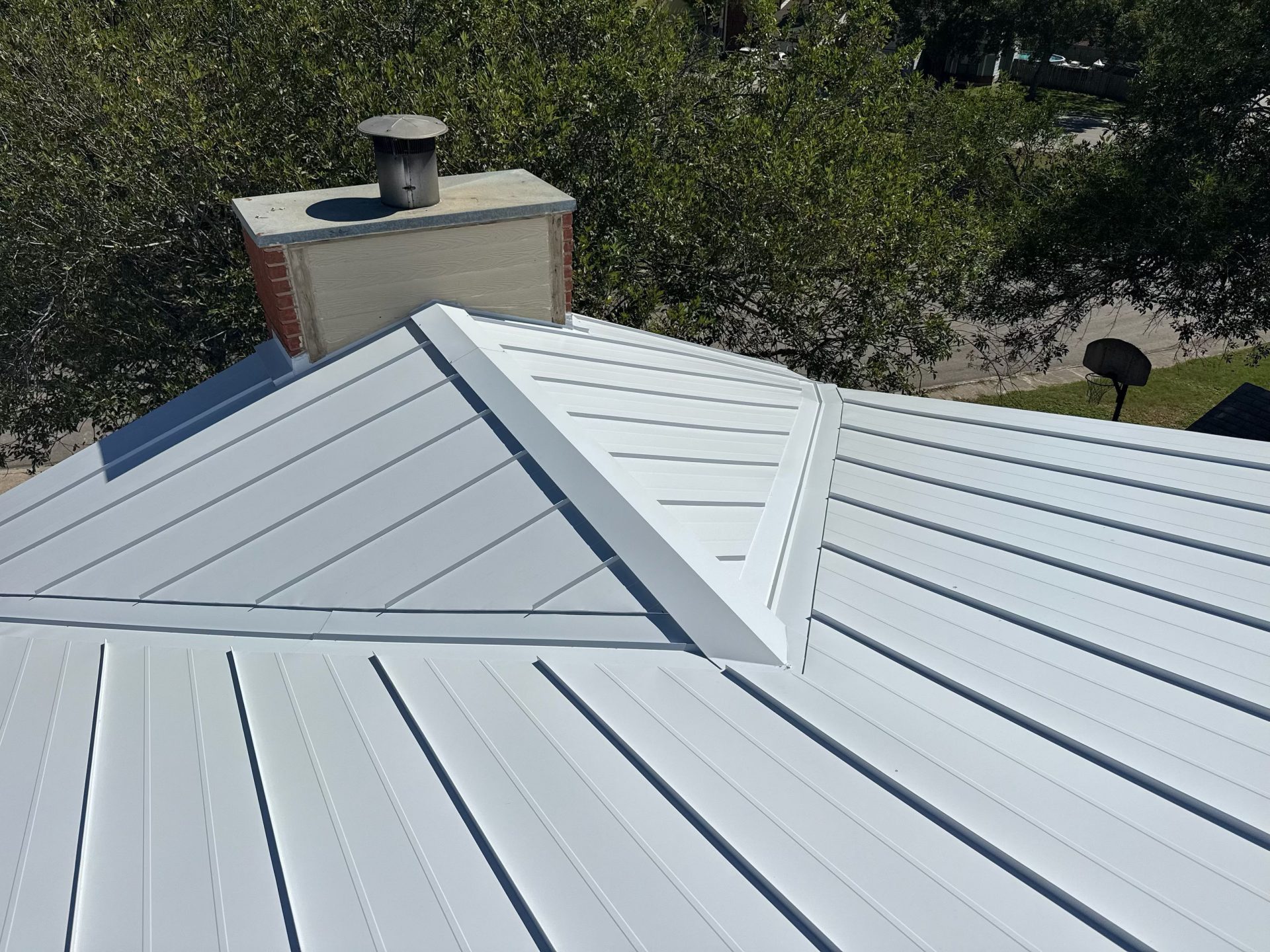
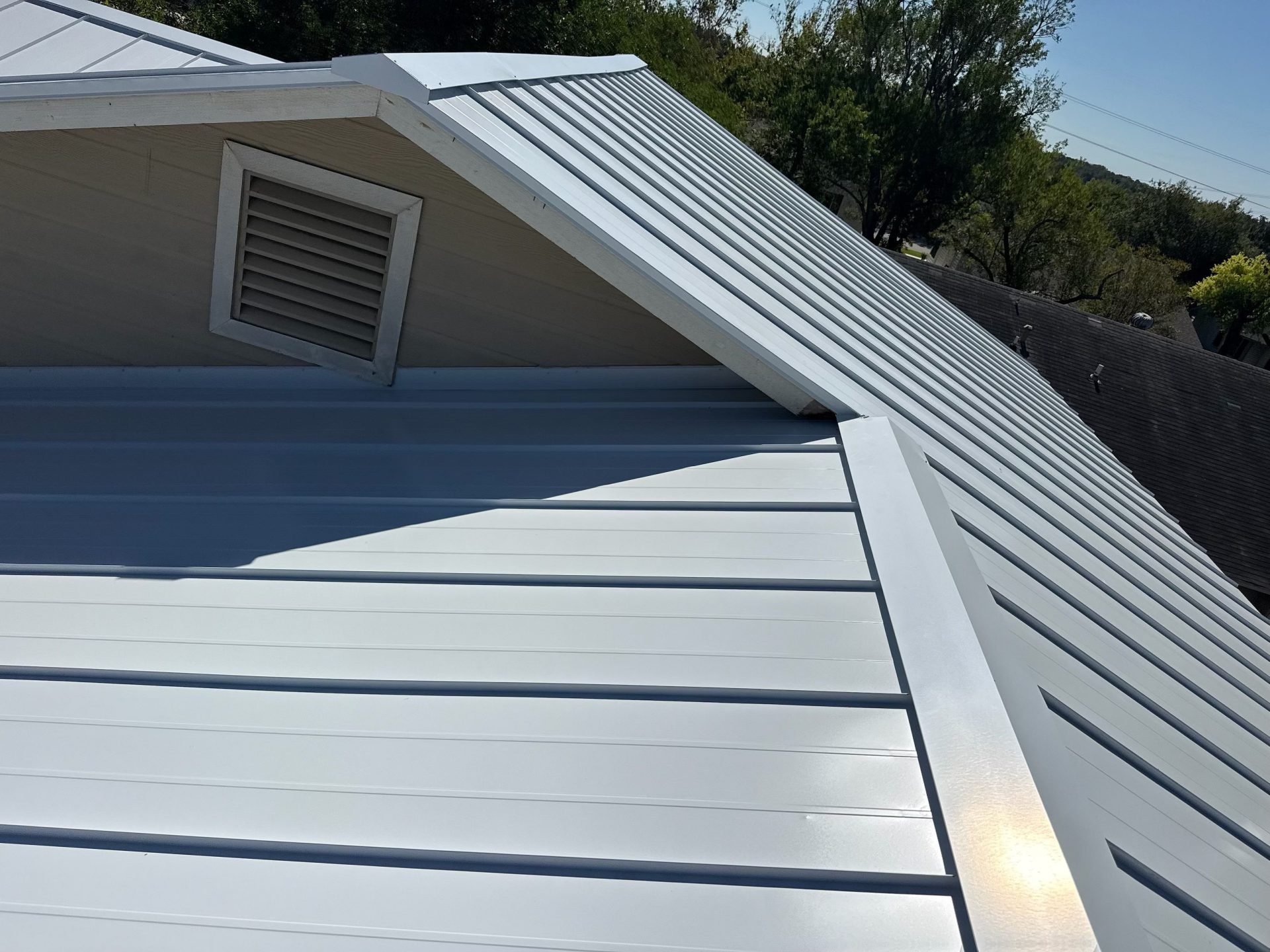
Austin, TX
Metal Roofing FAQ
Is a metal roof loud when it rains?
What kind of standing seam do you install?
How much more does metal cost than shingles?
Will a metal roof lower my insurance?
Does hail dent metal roofs?
Is metal a "cool roof"?
Thinking about metal? Call 418-ROOF
With over 10 years of roofing experience across San Antonio and the Hill Country, we’ll help you decide whether metal is right for your home. The inspection is free, with no obligation.
